

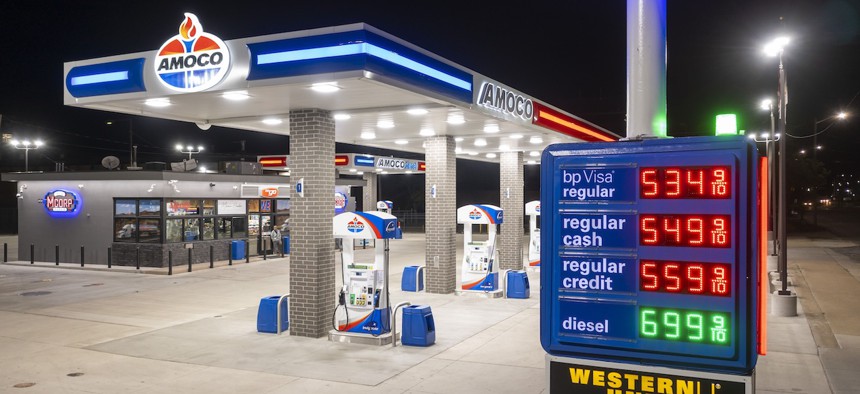
Gas prices at some stations in Detroit on May 14, 2026, are over $5 for regular and nearly $7 for diesel. NTEU National President Doreen Greenwald asked for a mid-year increase to gas reimbursement rates for official travel. Jim West/UCG/Universal Images Group via Getty Images




NTEU asks Trump administration to ease telework rules as gas prices spike
The union also called for an increase in gas reimbursement rates as the president’s war against Iran continues to disrupt the world’s oil supply.

The National Treasury Employees Union on Thursday called on the Trump administration to help federal workers cope with rising gas prices, as the president’s war in Iran threatens to enter its third month.
Since the effective closure of the Strait of Hormus since shortly after the United States began military strikes in February, the average price of gas has increased from less than $2.81 per gallon in January to $4.56 as of Thursday.
In a pair of letters Thursday, NTEU National President Doreen Greenwald called on agency leaders to take steps to help insulate federal employees from the recent spike in fuel costs, specifically by lifting Trump’s effective elimination of telework for most feds and by authorizing a mid-year increase to gas reimbursement rates for official travel.
In a letter to OPM Director Scott Kupor, Greenwald argued that allowing feds to work from home again would have a knock-on effect to lessen recent price increases’ impact on all Americans. She said agencies should reinstitute the workplace flexibility at least until the average gas price falls back below $3.00 per gallon.
“Not only does telework save the government money through reduced leasing costs, reduced energy expenses and increased productivity, it reduces traffic congestion and saves employees time and money commuting,” Greenwald wrote. “It also helps those who can’t telework by reducing commute times and fuel demand, which helps ease fuel cost increases for everyone. Mandating that all employees must work in person in federal offices, even though many of these jobs were done successfully remotely for years, creates a significant financial burden with gas prices so high, especially for those who live in more rural areas that may be further away from their official worksites.”
The union leader said the administration should abandon its planned pay freeze for federal civilian employees next year and instead impose a “fair” pay increase to help the workforce cope with rising energy and other costs.
And in another letter Thursday, this time to Internal Revenue Service CEO Frank Bisignano, Greenwald called for a mid-year increase to gas reimbursement rates for official travel.
Although the General Services Administration typically sets the government’s reimbursement rates for travel and lodging, those actions are capped by the IRS’ maximum rate at which taxpayers may deduct fuel as a business expense. The IRS has made mid-year increases to those caps three times since the turn of the century, most recently in 2022.
“This is a matter of fairness and basic equity for all Americans,” Greenwald wrote. “Failing to increase the mileage reimbursement rate in response to rising fuel costs shifts unreimbursed business expenses onto employees and creates unnecessary financial strain for all workers who must rely on their cars to perform their jobs, including federal employees.”
If you have a tip that can contribute to our reporting, Erich Wagner can be securely contacted at ewagner.47 on Signal.
NEXT STORY: What federal employees get wrong about divorce and retirement