

The Flemming awards this year recognized federal employees who have spearheaded science education initiatives and improved MRI technology. Evgeny Gromov / Getty Images



These award-winning feds want to advance science for the public good — and challenge stereotypes about government work
The Arthur S. Flemming awards have been around for more than 75 years and generally recognize civil servants who work in scientific fields.

Jan Tyler said she was a “math nerd” in high school and college. She’s been able to pursue that passion while working for the federal government, helping to manage the Energy Department’s teacher fellowships, K-12 programs and the National Science Bowl, an annual competition that quizzes middle and high school students on their knowledge of science and math.
When asked what her most impactful work at the agency has been, however, Tyler pointed to the Presidential Super Intelligence Challenge, a Trump administration initiative for students and teachers to learn how to use artificial intelligence.
“This gave us a chance to give them a safe opportunity to even just learn about [AI] or to play with it a little bit, and the response just blew us away,” she said. “We had about 25,000 registrations, and I think we were hoping for maybe 2,500 registrations. So it really did reach all parts of the country, and we were really proud of that.”
Tyler is one of seven federal employees who will receive the Arthur S. Flemming award this upcoming Sunday from the National Academy of Public Administration and George Washington University’s Trachtenberg School of Public Policy and Public Administration. The awards program recognizes career civil servants who have between three and 15 years of experience in the fields of applied science and engineering, basic science or leadership and management.
Tyler shared that receiving recognition is unusual for her.
“I'm the kind of person that likes to work behind the scenes,” she said. “Everyone [in government] wants to be there to do something good. We're certainly not there for the recognition.”
More than 700 feds have received the award over its more than 75-year-history, including Neil Armstrong (1969), Dr. Anthony Fauci (1979) and William Phillips (1987), a National Institute of Standards and Technology scientist who won the Nobel Prize for physics in 1997.
This year, Phillips is being presented with a Flemming lifetime achievement award. He received the recognition in 2020 but did not accept the award in person because of the COVID-19 pandemic.
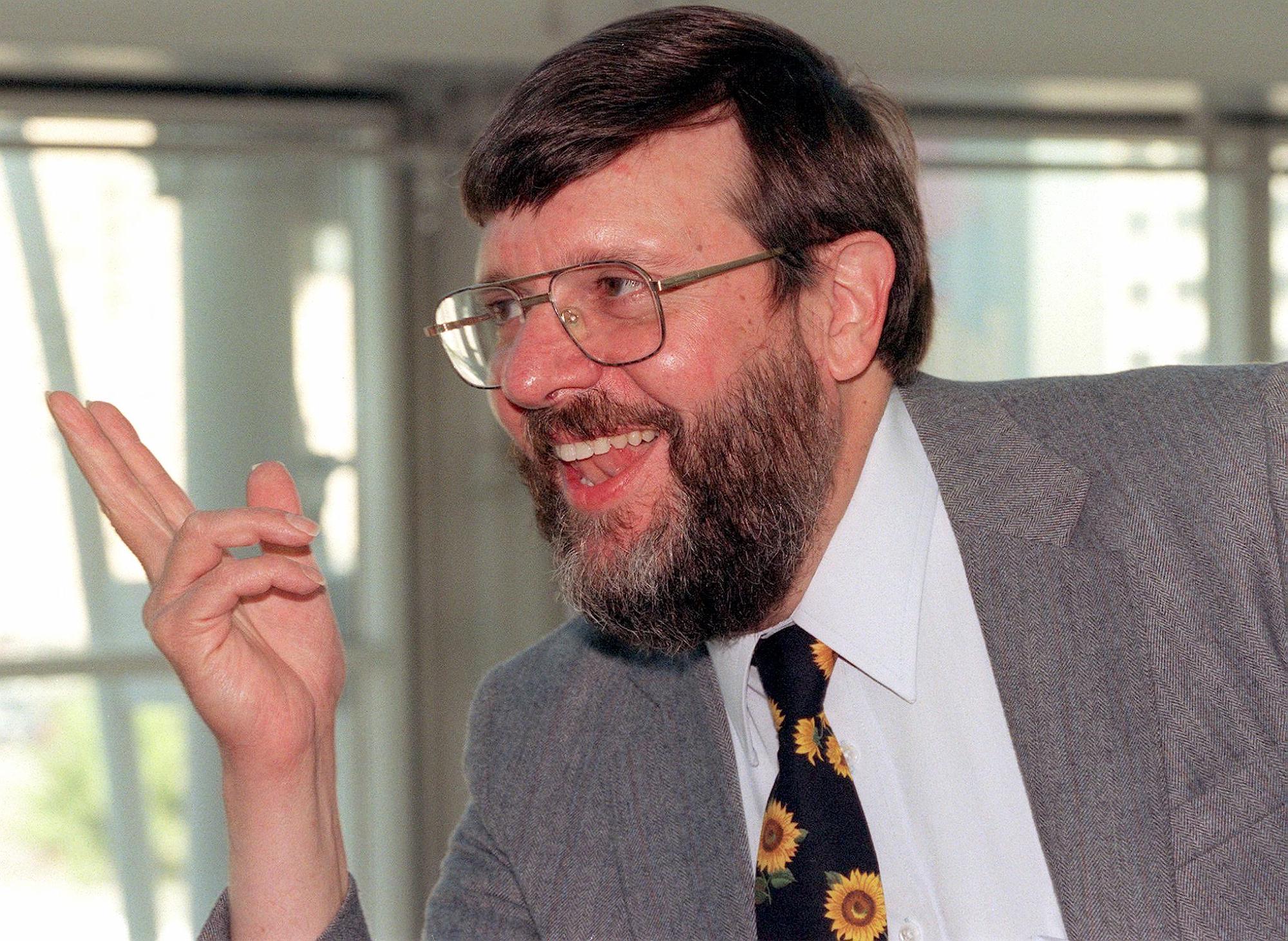
Phillips said that he has stayed at NIST for nearly 50 years because of the shared mission to solve problems for the public benefit as well as the cool coworkers.
“The people that I work with on a daily basis here at NIST are just so amazing. It's such a pleasure to be able to go next door to somebody who is an expert in things that I am not an expert in, but who is working very closely with me,” he said. “To get to go to the next building over and talk to somebody who was the architect of one of the key theories that allows us to understand the way atoms behave when they are at temperatures of a millionth of a degree above absolute zero, and say, ‘Okay, I don't understand what what we're seeing in the lab. Help me out here.’”
The Flemming lifetime achievement award is named after Katharine B. Gebbie, a former NIST lab director. During her tenure, four agency scientists, including Phillips, won Nobel prizes in physics.
Phillips recalled an incident when Gebbie decided to close out research after a partner agency withdrew its support, but she ensured that all impacted employees were able to move into other roles at NIST.
“She made sure every one of those people found a place to use their talents at NIST. What an amazing woman to have the kind of courage to say ‘We're going to use this as an opportunity to do even better, and we're going to make sure everybody comes out of this in good shape,’” he said. “I just can't imagine having either the courage or the skill to make that happen. She did, and I was always in awe of her.”
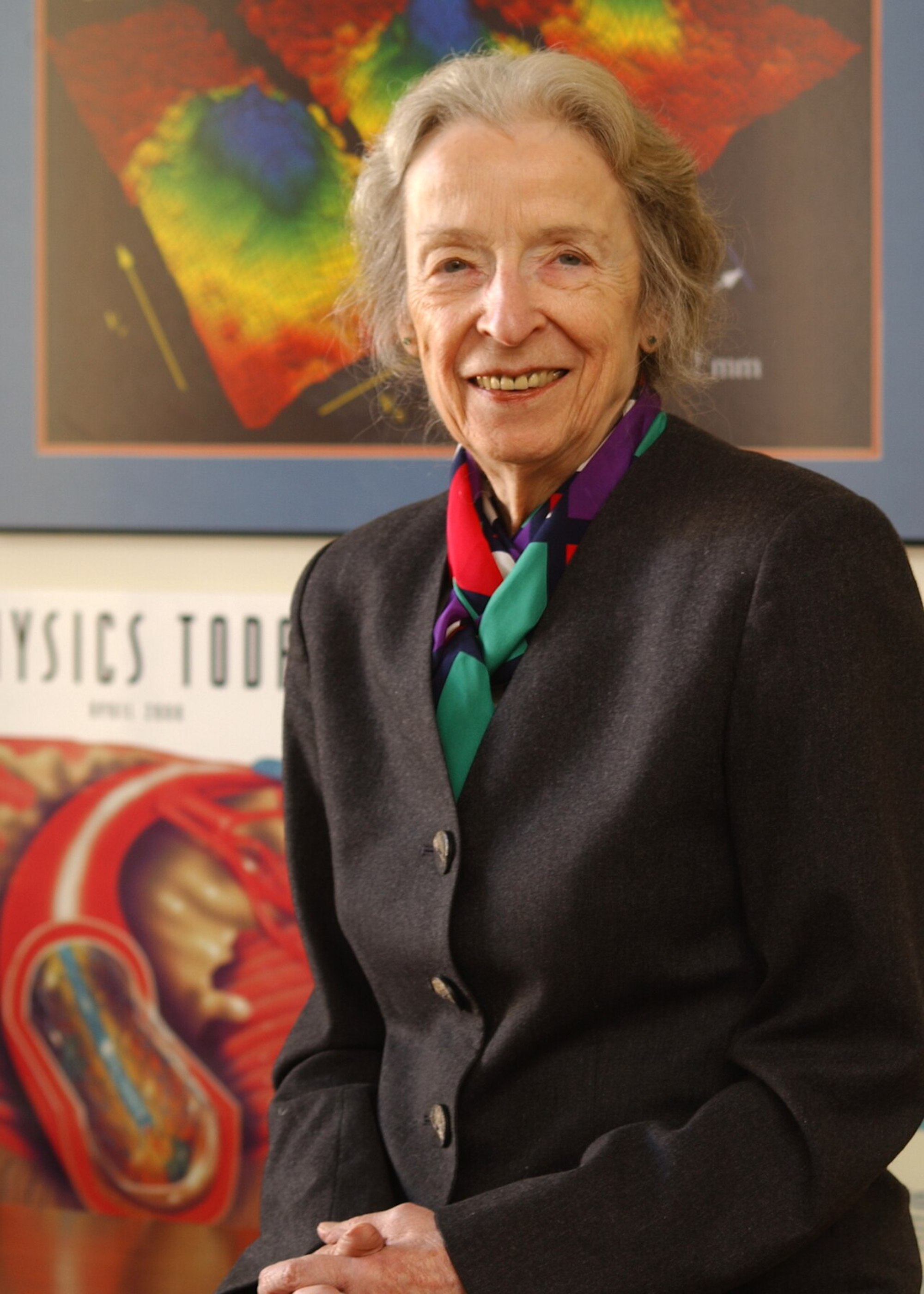
At a NAPA event earlier this year, Phillips spoke about his frustration with the phrase “close enough for government work” and its implication that civil servants don’t strive to improve their performance. He pointed out, as an example, that atomic clocks have gotten significantly more precise in recent decades because of federal research.
Similarly, Kathryn Keenan, a fellow NIST scientist, is receiving a Flemming award for her work to develop more effective breast cancer screenings and improve the accuracy of MRI. Specifically, she’s helped to develop objects “so you can test your scanner to see if you are making correct measurements.”
She said that this research was necessitated about two decades ago after pharmaceutical companies realized there was so much variability in MRI systems that it was difficult to tell in clinical trials if a drug was working.
“Our end goal is that you could get the same scan, collect the same images on multiple different MRI systems and you would get the same result,” she said. “It sounds like that should already exist, and it doesn't.”
After she found out that she would be receiving the Flemming award, she said that she “sat in my office and cried a little bit.”
“I know government employees, and I know how hard we all work and we have been portrayed differently than I know us to be,” Keenan said. “Our day-to-day experience has become more challenging, so it's very meaningful to have that effort and work recognized.”
If you have a tip that can contribute to our reporting, Sean Michael Newhouse can be reached securely at seanthenewsboy.45 on Signal.
NEXT STORY: Post-midterms, federal unions push for pay raise, restoration of bargaining rights