

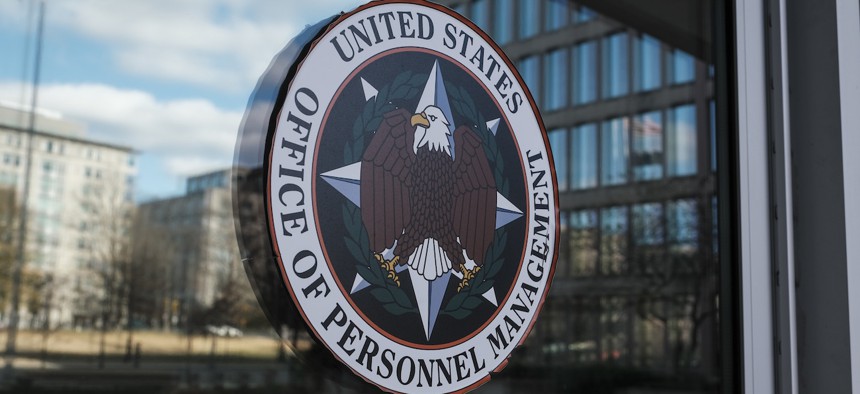
In 2025, Congress enacted a law requiring stricter screening of participants in the Federal Employees Health Benefits Program and Postal Service Health Benefits Program to ensure they are eligible for coverage. Michael A. McCoy/For The Washington Post via Getty Images

OPM to set new requirements to ‘verify’ FEHBP enrollments
Newly published regulations would implement a 2025 law enacted in response to a GAO report that found the government could spend up to $1 billion annually on health benefits for people who are no longer eligible to receive them.

The Office of Personnel Management on Tuesday published regulations aimed at better verifying that family members of federal workers and retirees are eligible for benefits under two of the government’s employer-sponsored health insurance programs.
Last year, Congress enacted a law requiring stricter screening of participants in the Federal Employees Health Benefits Program and Postal Service Health Benefits Program to ensure they are eligible for coverage. That move came following a 2022 Government Accountability Office report finding that the government could be spending upwards of $1 billion per year to cover family members and former spouses of federal workers and retirees who no longer qualified as dependents.
In 2024, OPM instructed agencies to audit a sample of 10% of FEHBP enrollees—the PSHBP had not yet launched at the time—to verify their continued eligibility. But due to a combination of “high transactions” during the 2024 open season and “staffing challenges” last year, the effort never made it off the ground.
In a final rule published to the Federal Register Tuesday, OPM said beginning July 1, federal workers who enroll a child or spouse in health insurance benefits through FEHBP or PSHBP will be required to provide proof of their eligibility. Among the acceptable documentation are government-issued marriage certificates, birth certificates, paternity tests and foster child or adoption paperwork. Parents of adult dependents under 26 may submit their children’s tax returns to confirm eligibility, and in instances involving a disabled adult, a medical certification that they are incapable of “self-support” will be accepted.
Under the new process, agency employing offices or OPM can disenroll a family member of the federal worker “fails to provide adequate documentation” of their eligibility. If someone is disenrolled, they may ask for a reconsideration of that decision within 60 days, but the result of that process is “final.”
While much of the rule is aimed at improving eligibility verification when a dependent is first added to insurance coverage, OPM said it is still preparing for the FEHB Protection Act’s other major provision: an audit of existing enrollments to verify participants’ continued eligibility.
“OPM concurs that there are ineligible family members participating in the program and more can be done to identify and remove them from coverage,” the rule states. “That [GAO] report made several recommendations, many of which OPM concurred with and implemented. While this work progresses, OPM is also preparing for the family member eligibility audit required by the FPA. This audit is a critical piece of addressing ineligible family member coverage and restoring program integrity, but the economic effects of the audit are not included in this rule since it is not affected by this rule.”
If you have a tip that can contribute to our reporting, Erich Wagner can be securely contacted at ewagner.47 on Signal.
NEXT STORY: TSP funds kept climbing in May