

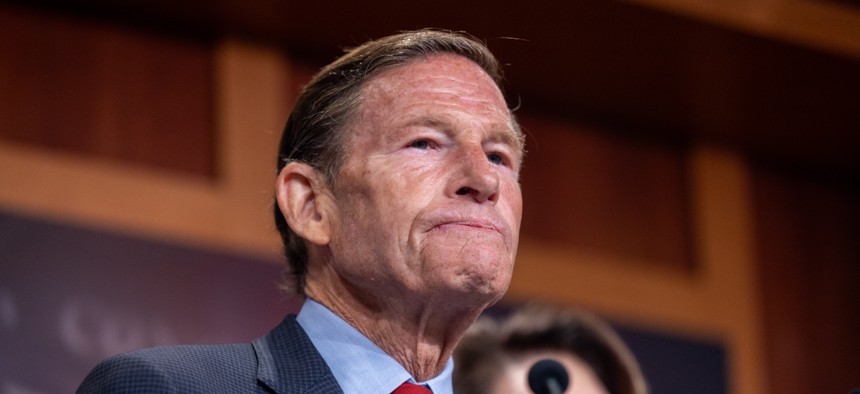
Sen. Richard Blumenthal, D-Conn., ranking member on the Senate Veterans Affairs Committee, said recent VA policies are having "a damaging and dangerous impact on the quality and timeliness of care" for veterans. Nathan Posner / Anadolu / Getty Images





VA has shed 40,000 employees, Democratic report finds, with drastic impacts on veterans
The department saw staffing losses of 30,000, which includes thousands of front-line health care staff.

Updated Jan. 23 at 11:32 a.m.
The Veterans Affairs Department has shed tens of thousands of employees under President Trump and veterans are experiencing worse outcomes as a result, Senate Democrats said in a report on Thursday, which laid out a series of policy changes they said have negatively impacted VA’s operations.
The bulk of the report focused on the “systematic destruction of the VA workforce” and found 2025 was the first year the department experienced a net loss of employees. VA originally planned to slash 83,000 employees through combination of voluntary and involuntary measures, but later walked that back and reset the goal of 30,000 net job losses accomplished only through attrition. The losses are exceeding that total, Democrats on the Senate Veterans Affairs Committee, led by Ranking Member Richard Blumenthal, D-Conn., found in the report, and are creating an “untenable” situation at the department.
“Dedicated professionals with decades of expertise are fleeing and recruitment is flagging because of toxic work conditions and draconian cuts and firings,” Blumenthal said. “These policies are having a damaging and dangerous impact on the quality and timeliness of care that will be felt for years to come.”
All told, VA lost more than 40,000 employees in fiscal 2025, with 88% of those employees coming from the Veterans Health Administration. The net loss of employees, however, is closer to Secretary Doug Collins' goal of shedding 30,000 employees for the year. VA lost 3,000 registered nurses and 1,000 physicians. The department has shed 1,100 custodians, 700 social workers and nearly 2,000 claims processors.
In recent years, VA had been averaging a net gain of at least 10,000 employees. Collins has repeatedly stated that continually growing VA has failed to improve services at the department and it was time to try a new approach.
“After decades of work to improve VA’s status as a preferred employer and increase the number of quality applicants, facilities’ ability to recruit and retain have plummeted at unprecedented rates,” Blumenthal said.
VHA’s chief, John Bartrum, issued a memorandum last week that lifted the longstanding partial hiring freeze at VA, but cemented that each regional office within VA must operate within specific staffing caps. Any changes to those caps will require approval by the VA Strategic Hiring Committee, according to the memo, which the Democrats made public in their report, to ensure “proper oversight and stewardship of valuable resources and the efficient allocation of agency resources.”
President Trump signed an executive order last year requiring agencies to create strategic committees to approve hiring once they unfroze hiring for the first time since Trump took office in January. The restrictions, the lawmakers said, are still slowing down hiring.
“Facility leadership in the field are still reporting denials and severe delays in hiring approvals for all positions from clinical staff to custodians to claims processors,” the report found.
The report also cited a “harassment” of the VA workforce for exacerbating losses, including through separation incentives, firings and the requirement of all employees—many of whom had never reported to an office—to no longer work remotely.
“The VA is hemorrhaging good people because of an unnecessary war on remote work,” an anonymous VA employee was quoted as saying in the report. “And this hemorrhage is going to directly affect veterans.”
The Senate Democrats accused VA of restricting veterans access to care by rolling back presumptive benefits to some toxic-exposed former servicemembers, cutting off research, increasing wait times for services like x-rays and delaying openings of new clinics. Wait times for mental health appointments have grown to 35 days on average, they said. The department has lost 1,500 schedulers since last January.
Pete Kasperowicz, a VA spokesman, disputed the mental health wait time finding, calling the report's suggestion unsubstantiated. Through fiscal 2025, he said, wait times for mental health appointments were under six days for established patients and 19 days for new patients. An aide to committee Democrats said their calculations came from VA's public facing data and encouraged the department to make its internal numbers available to the panel, which it has been requesting since May.
Kasperowicz noted VA has opened new clinics, expanded availability of appointments outside normal hours and permanently housed more than 50,000 homeless veterans, among other accomplishments.
"Sen. Blumenthal sat on his hands throughout the entirety of the Biden Administration, when VA failed to solve all of its most serious problems," he said. "While Blumenthal stages political theater, VA is making major improvements for Veterans under President Trump."
VA has repeatedly boasted that it has shrunk the backlog of veterans waiting extended periods of time for their benefits, bringing it down by 57% since Trump took office. The Democrats acknowledged this success but said the quality of claims decisions is weakening and employees are getting burned out. The number of veterans asking VA to review their claim jumped by 44% over the last year, the lawmakers found.
“In the matter of workload, in determining Veteran's benefits, it adds additional stress as [the] need to reduce the backlog does not seem feasible with a smaller workforce, as we are now being pushed to move claims faster to meet the standards our director has outlined with a smaller staff,” one Veterans Benefits Administration employee said in the report.
Congress has approved higher reimbursement rates from some providers who offer services to homeless veterans, but Democrats found VA has yet to implement the change in a “clear violation of congressional intent.” Cuts to certain Housing and Urban Development programs will also negatively impact veterans, the lawmakers said.
The report also highlighted the impact the Department of Government Efficiency had on VA’s operations through the reduction in contract spending. DOGE oversaw the decision to let 14,000 contracts expire and canceled 2,000 more, the lawmakers found. Some of those decisions were later reversed, though many remain in effect.
“To this day, VA has refused to explain how it will replace any cancelled services—leaving serious gaps in care for veterans and in the ability of hospitals and facilities to run smoothly,” the lawmakers said.
This story has been updated with additional comment.
Share your news tips with us: Eric Katz: ekatz@govexec.com, Signal: erickatz.28
NEXT STORY: Democrats press CISA’s acting chief over major staffing cuts