
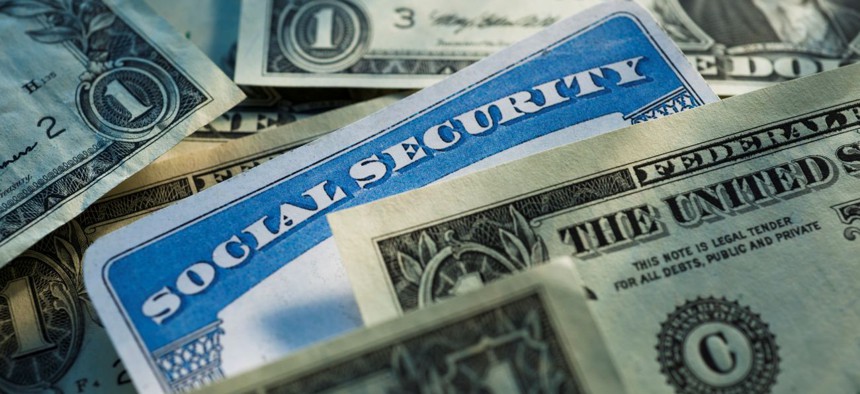
Annuity payments for federal reitrees are set to increase by between 2.6% and 3.6% next year, depending on the retirement system, spurring renewed calls to enact legislation standardizing the annual cost-of-living adjustment. Getty Images




Cost-of-living adjustments for federal retirees to increase next year
Former federal workers are set to receive between 2.6% and 3.6% more from their retirement annuity next year, according to new numbers from the Social Security Administration.

Retired federal employees are set to see their defined benefit annuity payments increase in January, though many will still receive what advocates call a “diet COLA.”
The Social Security Administration announced Wednesday that Social Security beneficiaries will receive a 3.6% cost-of-living adjustment next year, an improvement from last year’s 2.8% increase. SSA calculates the increase based on the annual change in the third quarter consumer price index for workers.
Federal retirees in the Civil Service Retirement System will therefore receive a 3.6% increase to their annuities next year, but former feds who are part of the Federal Employees Retirement System, launched in the 1980s alongside 401(k)-style Thrift Savings Plan, will see only a 2.6% adjustment.
That’s because FERS’ annual cost-of-living adjustment is based on an extrapolation of the CSRS and Social Security increase. Each year, if CSRS sees an increase of less than 2%, FERS retirees receives the full COLA. But if the figure falls between 2% and 3%, FERS participants receive only a 2% increase, while if the COLA is 3% or more, like this year, FERS enrollees receive that adjustment, minus 1 percentage point.
Organizations representing federal workers and retirees have argued this is inequitable, and support legislation to standardize the COLA across the FERS and CSRS populations. In addition to having access to the TSP, FERS enrollees also pay into Social Security while they work and may draw upon it when they reach retirement.
“With inflation above 3%, FERS retirees will have their COLAs reduced by an entire percentage point, reducing the real value of their annuities,” said William Shackelford, national president of the National Active and Retired Federal Employees Association. “Inflation impacts these FERS retirees the same way as all other retirees, yet they are forced to accept a diet COLA. The Equal COLA Act would remedy this inequity, providing full COLAs to FERS retirees.”
Despite the pending increase in annuity payments, NARFE warned that the improvement threatens to be swallowed up by further increasing costs next year, namely in the form of double-digit average increases to federal workers and retirees’ health insurance premiums in the Federal Employees Health Benefits and Postal Service Health Benefits programs. Some insurance carriers report that premiums could jump by as much as 100% in January.
“This COLA also does not adequately compensate for the sharp increase in the enrollee share of health insurance premiums affecting the federal community, which will rise by an average of 10.9% next year for federal annuitants, following a 12.3% increase for 2026 and a 13.5% increase for 2025,” Shackelford said. “This comes on top of rising prices for many other goods and services.”
Most current federal employees, conversely, are set to have their pay frozen next year, while some law enforcement officers are slated for a 3.8% average pay increase in January.
If you have a tip that can contribute to our reporting, Erich Wagner can be securely contacted at ewagner.47 on Signal.
NEXT STORY: Don’t let 5% become your TSP retirement strategy