
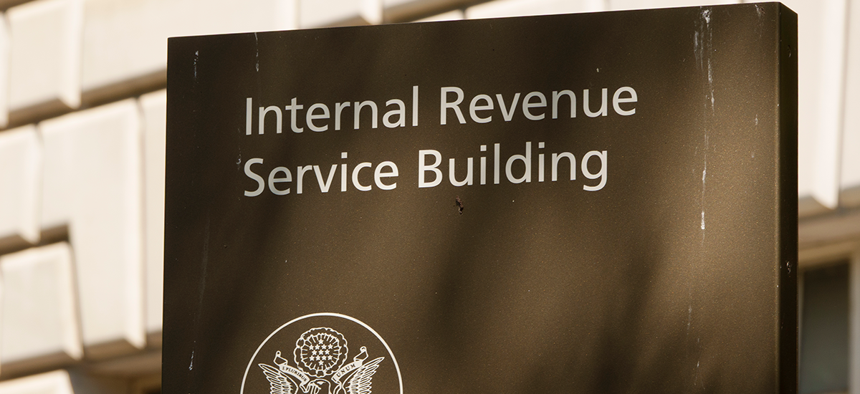
The IRS Is using artificial intelligence tools to offset last year's workforce cuts, according to a watchdog office. Kevin Carter/Getty Images




IRS workforce issues prominent among watchdog’s FY27 priorities
Even after substantial workforce cuts last year, the IRS's headcount is “consistent with historical staffing” levels. But TIGTA finds these cuts “occurred rapidly and resulted in the departure of many experienced employees.”

The Treasury Inspector General for Tax Administration is planning to take a closer look at the state of the IRS workforce through a series of reviews scheduled for the rest of fiscal 2027, according to a list of planned projects released by the watchdog office.
Projects include an updated “snapshot” of the IRS workforce and examining the agency’s plans to improve the “efficiency and effectiveness” of its tax-collection and audit work “with fewer employees using enhanced technology and other approaches.”
“The IRS is using SI to help offset IRS workforce reductions and enhance tax collections,” TIGTA wrote in a report highlighting the IRS’s top management challenges. The Trump administration has directed agencies to refer to artificial intelligence as “super intelligence” or “SI.”
The agency's chief executive officer, Frank Bisignano, told employees in an all-hands meeting last month that an “AI-first IRS” will “deliver larger collections and better client service to the American public.”
The IRS cut its workforce by 30% between January 2025 and January 2026 – dropping from about 104,000 employees down to 74,000 full-time staff. TIGTA wrote that the agency’s current headcount “is consistent with historical staffing” levels, but noted that the staffing reductions “occurred rapidly and resulted in the departure of many experienced employees.”
The agency is also dealing with a shrinking annual budget and dwindling multi-year modernization funds. Congress enacted a 20% spending cut for the IRS in FY 2026 appropriations. Lawmakers have also repeatedly pared back long-term funds for the IRS to complete long-deferred upgrades to its aging IT systems.
Congress initially granted the IRS $80 billion in the 2022 Inflation Reduction Act to rebuild its workforce and invest in IT modernization over a 10-year period. But these funds shrank down to $26 billion after rescissions from lawmakers. Roughly a third of this money remains unspent as of March 2026.
“Completing modernization projects, providing quality service to taxpayers, and enforcing tax laws with a reduced workforce and budget are challenges for the IRS,” TIGTA wrote.
TIGTA wrote that the IRS “expanded its use of technology to streamline tax return processing” during this year’s filing season. The agency, as part of its zero paper initiative, is digitizing paper tax returns for easier processing and automating the processing of some amended tax returns.
The watchdog office will also review some of the agency’s other methods to deal with short-staffing. TIGTA said it will examine the IRS’s use of premium pay and mandatory overtime to keep up with its workload during this year’s filing season. It reported in May that regular work hours at the IRS decreased by 14% between 2024 and 2025. During this same period, the agency saw a 12% increase in overtime hours.
The inspector general’s office will also review the agency’s temporary reassignment of mid-career employees to frontline entry-level jobs many of them had no prior experience doing.
The IRS starting in February put IT and human resources on temporary details in taxpayer services, answering inquiries from taxpayers and processing tax returns.
More recently, these employees have been reassigned to “ONE IRS Readiness” teams, but with few details on what work they’ll actually be doing. According to TIGTA, the “One IRS Initiative” is focused on training existing employees to temporarily assist other functions as needed.
“However, the results of this effort are currently unknown,” TIGTA wrote.
A TIGTA spokesperson previously told Government Executive that auditors expect to complete this report by May 2027.
TIGTA will also examine whether the IRS is collecting on employees’ non-tax debts, including advanced leave and salary overpayments, in a timely manner.
The IRS in July put an indefinite hold on employees taking advanced annual and advanced sick leave, pending efforts to reduce “existing significant advanced leave balances.”
Federal employees are generally allowed to use “advanced” annual or sick leave for several reasons – including major medical emergencies, family care and bereavement of an immediate family member – if they have already exhausted their annual leave or sick leave. With advanced leave, employees are essentially borrowing from a reserve of leave hours they will eventually earn.
Federal employees who leave government service with a negative leave balance must refund the cost of that advanced leave, and agencies may deduct it from their final paycheck.
Senate Democrats pushed back on this new policy in a letter to Bisignano, calling it a “cruel and unjustified plan that is likely to drive additional employees out the door.”
TIGTA will also continue to review whether IRS employees are complying with the Trump administration's mandate to return to the office full-time. The watchdog office released a report in March showing that IRS employees largely complied with the return-to-office mandate.
If you have a tip that can contribute to our reporting, Jory Heckman can be securely contacted at jheckman.29 on Signal.
NEXT STORY: OPM formally ends FEVS in favor of agency-specific surveys