georgeclerk/Getty Images




GAO's independence matters more than ever as a new comptroller general is chosen
COMMENTARY | The FAA's nationwide ground stop exposed the consequences of poor agency management. The watchdog that warned of trouble needs a leader committed to its nonpartisan mission.

At last week’s press conference following the nationwide air traffic control collapse, Transportation Secretary Sean Duffy said, “it's not red, it's not blue, it's not Democrat, it's not Republican, it's American, give us the money to fix it.” A couple of days later, however, he blamed Congress and the Biden administration for the problem. “I can’t apologize for what was passed off to us, and I can’t blame Republicans or Democrats because it’s all of them,” he said.
As the details rolled out, however, the immediate problem wasn’t pouring more money into the system. It was managing the money they had. The problems in managing the money rolled through 2025 and 2026, without an integrated plan for using the $12.5 billion that Congress appropriated in the One Big Beautiful Bill Act.
The trigger for the system collapse came from a software upgrade that hit the air traffic control hardware on the busiest day of the week, amid an upgrade funded by money that Congress had already appropriated. The old part of the system operates off copper wiring, some of which dates from the 1960s. A new system using fiber optic cable is gradually replacing those prehistoric connections. Fiber optics can carry a lot more information than copper. The upgrade pushed through the fiber optic worked fine, but it choked on the copper and routers using it. That in turn made it hard for the radars to tell just which planes were where, so the system shut down.
But this isn’t fundamentally about hardware. The FAA contracted out the system upgrades and one of them, L3Harris, is in charge of the network. The problem came when the company hit the button to install the upgrade. The work was being done by L3Harris and other contractors, and FAA struggled to manage the contracts—as it has for many years.
The air traffic control system desperately needs more money, but approving more money won’t solve the core problem: the FAA’s management of l3Harris and other contractors. There are 11,389 separate tracks for the upgrade, and the FAA has struggled to integrate all these different parts.
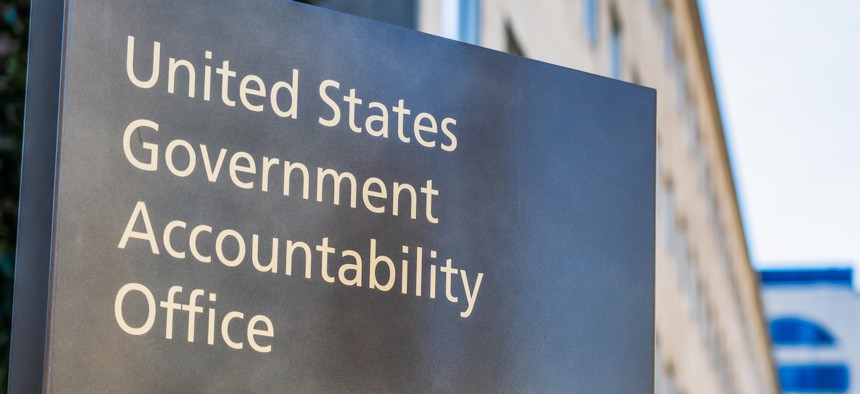
The fact that all these problems could lead to a system collapse certainly wasn’t a surprise. The Government Accountability Office issued a report warning about exactly that, two months before the collapse. Without better FAA management of its contractors, GAO said, “the agency could end up causing air traffic disruptions or prolonging reliance on severely outdated systems.” All that was missing was the date.
That’s one of the many reasons why we need a GAO. The agency has long produced invaluable analyses about the government’s biggest management problems—about 700 reports a year, most of which are on arcane subjects dear to the heart of wonks such as “Early Planning Is Critical to Assessing VA’s New Foreclosure Avoidance Program” and “F-35 Program: DOD Needs to Strengthen Oversight of Tens of Billions of Dollars in Parts.” Since 1990, GAO has produced a “high-risk list” of programs most vulnerable to fraud, waste, abuse, and mismanagement, together with recommendations about how to root fraud out.
In short, GAO is a national treasure. Its fierce nonpartisanship, coupled with the tremendous expertise of its staff, is its greatest strengths. GAO is a congressional agency, and its work is invaluable in helping Congress ensure a genuine constitutional balance of powers.
All this is falling into sharp focus in the coming days. The position of GAO’s head, the comptroller general, has been vacant for nearly a year, and the Trump administration is now racing to put into place a new comptroller general friendly to its politics before the new Congress moves into town.
It’s an unusual position, with a 15-year term, the longest in the federal government. There’s an equally unusual process for filling it. When the position becomes vacant, a commission of congressional leaders automatically comes into existence and then must send the White House a list of at least three names. The president sends a nominee back to Congress who might—or might not—come from the congressional list. The Senate then must decide whether to confirm the new president’s choice through a majority vote.
With the Democrats preparing to take control, congressional Republicans have switched the process into overdrive. The commission hasn’t met yet and the president hasn’t nominated a candidate, but Sen. Rand Paul, R-Ky., chairman of the Senate Homeland Security and Governmental Affairs Committee and the person in charge of sending a nomination to the floor, has scheduled a hearing on a nominee.
For weeks, reliable reports have circulated that the White House plans to nominate Eric Ueland, currently the deputy director for management at the Office of Management and Budget and a close ally of OMB Director Russell Vought, and Democrats believe that the Republicans are trying to short-circuit the process. With recent GAO opinions that the administration was illegally impounding congressionally appropriating funds, Democrats and Republicans alike know the stakes.
GAO knows the political implications of its job. Its institutional role, after all, is to be a burr under the federal government’s saddle, pointing to looming problems and potential solutions to big issues. That’s just the case for the FAA’s air traffic control modernization issues and GAO’s report that points out that the system needs money but that pouring more money into the system won’t solve the most fundamental problems. GAO’s work points to the essential steps in the improvement of the FAA’s management to ensure that the money doesn’t go to waste and the problems don’t recur.
This GAO appointment is too important, with implications stretching into the 2040s, for it to be rushed through in ways that would hyper fuel partisanship, especially for an agency whose nonpartisanship has always been its biggest strength.