

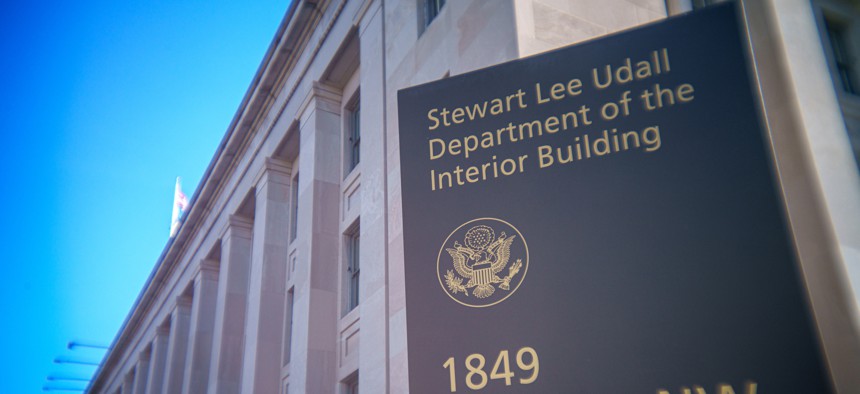
The Interior Department is consolidating its bureaus, but the Indian Affairs component, for now, is exempt from such efforts. J. David Ake / Getty Images




A thinning roster at Indian Affairs leaves tribes wondering who’s left to help, watchdog reports
Indian Affairs’ workforce has decreased by 11% since the start of President Donald Trump’s second term.

The Government Accountability Office has long warned that staffing shortages in the Interior Department’s Indian Affairs bureaus have hindered service delivery to tribes. Nevertheless, the component was not spared from the Trump administration’s federal workforce reductions.
In a report released on Wednesday, GAO found that Indian Affairs’ job cuts have left critical vacancies, causing concern among tribal leaders about the future effectiveness of programs that support law enforcement, schools and natural resource management.
Investigators reported that Indian Affairs’ workforce has experienced an 11% net decrease since January 2025, going from 7,470 employees to 6,624.
These reductions are primarily due to two voluntary separation programs that Indian Affairs offered in 2025. Such programs generally put employees who agreed to leave government service on paid administrative leave through Sept. 30, 2025. The agency also instituted a hiring freeze but has been able to obtain waivers to bring on some staffers.
As a result, the agency has been forced to operate with fewer workers. For example, six of 12 Bureau of Indian Affairs regional directors were acting and 12 of 24 deputy regional director positions were acting or vacant, as of June 2, 2025. And one regional director reported that some of their agency offices no longer had employees for agriculture, forestry or realty programs.
During consultations between Indian Affairs and tribal leaders in spring 2025, leaders argued that the agency already didn’t have adequate staffing.
“Some tribal leaders said that additional staff were needed and emphasized the efficiency benefits that come with having long-term, well-trained staff,” GAO investigators wrote. “Tribal leaders raised concerns about the loss of specialized knowledge, such as knowledge about service delivery to tribes in Alaska, resulting from the loss of staff with extensive or specialized experience.”
In recent years, GAO has recommended that the Bureau of Indian Education, a component of Indian Affairs, hire more staffers to oversee COVID-19 relief funding to schools at high risk for financial mismanagement and warned that management of $385 million in funding for Indian Affairs from the 2022 Inflation Reduction Act could be impeded by vacancies and skills gaps in its workforce.
While the Interior Department is in the midst of consolidating its bureaus, Indian Affairs officials told GAO, as of December, that they do not currently have plans to reorganize or further reduce their workforce.
GAO provided Indian Affairs an opportunity to comment on the report, but officials declined. Indian Affairs also did not respond to a request for comment.
Share your experience with us: Sean Michael Newhouse: snewhouse@govexec.com, Signal: seanthenewsboy.45
NEXT STORY: Democrats ask watchdog marked by past controversy to expedite reviews of ICE, CBP