

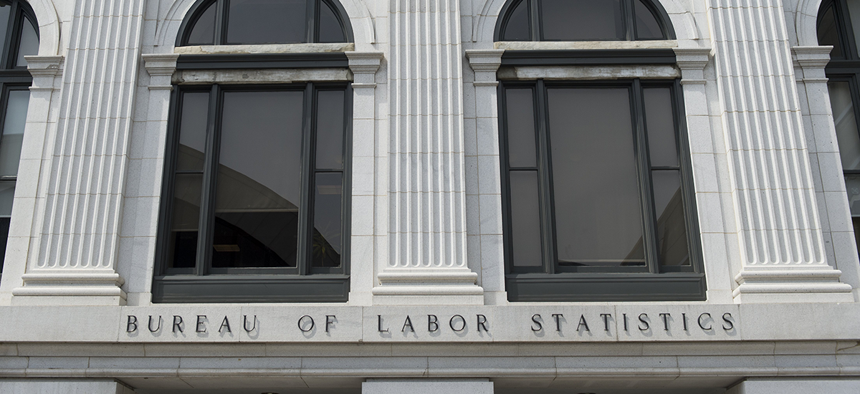
President Donald Trump fired the head of the Bureau of Labor Statistics after the agency produced a monthly jobs report that showed hiring had slowed, raising concerns about the long-term independence of federal statistical agencies. Bill Clark/Getty Images



Staffing cuts are leaving federal statistical agencies stretched thin
The Bureau of Labor Statistics and Census Bureau have been hard hit by staffing cuts, and experts say replacing lost expertise won't happen overnight.

Federal statistical agencies, including the Bureau of Labor Statistics and Census Bureau, are facing deep staffing cuts and minimal hiring, raising alarms about their long-term ability to deliver objective datasets that drive policymaking and the economy.
All 13 principal federal statistical agencies have seen staffing cuts since the start of the Trump administration. Six of them shed at least a third of their headcount, and two of them lost more than two-thirds of their employees.
The American Statistical Association, in its midyear report, warns that these staffing cuts and persistent leadership vacancies “put the agencies in a weakened and vulnerable position to meet rigorous production schedules,” and “keep up with the demands of producing relevant, timely, and accurate statistics for decisionmakers and the public.”
“While hiring has resumed at seven agencies, current recruitment has barely begun to offset earlier losses and does not immediately address the loss of expertise and experience that occurred in last year’s downsizing,” the report states.
Steve Pierson, the director of science policy at American Statistical Association, told Government Executive that “everyone is doing more these days because of these cuts.”
“The loss of staff is not just the numbers. It’s the expertise, it’s the mentorship,” Pierson said. “You lose that, and it does affect the long-term productivity, as well as possibly the production of these reports.”
Some agencies have seen particularly deep staffing cuts. The National Agricultural Statistics Service lost nearly 40% of its staff since 2024, and is expected to see further workforce attrition as part of the Agriculture Department’s sweeping relocation plans. NASS employees had until July 8 to decide whether to accept relocation to St. Louis or one of the agency’s regional offices. Relocated staff are expected to report to their new offices by Sept. 21.
The Education Department’s National Center for Education Statistics lost nearly all its employees last year, as part of the Trump administration’s ongoing plans to dismantle the department. NCES shrank from about 100 staff to just four employees last year, but now has about a dozen full-time staff.
Claire McKay Bowen, a senior fellow at the Urban Institute who leads its data governance and privacy team, said the remaining staff at these agencies are spread thin and often juggle work for several positions.
“Federal statistics are the eggs that go into cake that we like to eat, and the capacity aspect is the fact that we’re not having enough bakers now at this point,” Bowen said.
Meanwhile, many former federal statistical officials are still out of work following last year’s widespread layoffs and voluntary separation offers.
“That means that you get a bunch of folks who are highly educated flooding the market,” Bowen said.
Last summer, President Donald Trump fired the head of the Bureau of Labor Statistics after the agency produced a monthly jobs report that showed hiring had slowed. The incident raised concerns about the long-term independence of federal statistical agencies, but after pushback from Congress and those who rely on BLS data, Pierson said the Trump administration is unlikely to target the heads of other statistical agencies.
“We have full confidence that the products being released by the federal statistical agencies have not been improperly influenced or manipulated by this administration. It’s too hard to do. They don’t seem to have the desire to manipulate the data, and if that would happen, just given the processes, given the commitment of our civil servants, we would learn about it,” he said.
The Trump administration hasn’t named many permanent leaders to oversee these agencies. The Bureau of Justice Statistics hasn’t had a permanent director in three years. The Census Bureau, which is gearing up for the 2030 population count, has been under acting leadership for about a year and a half. About a third of leadership positions at BLS are vacant.
Bowen said the lack of permanent leadership makes it harder for these agencies to set longer-term goals.
“Nobody likes uncertainty, at the end of the day. Not knowing who is the leader, or what their priorities are, people are going to be hesitant to commit to making certain changes or proposals,” she said.
Bowen said that with the proliferation of acting leaders, many federal statistical officials are handling multiple roles.
“A lot of the folks that I’ve talked to across the agencies, a lot of them are wearing three, four, five hats – which is not great,” she said. “That person is doing the best they can, but you can imagine that that means their bandwidth is just very split.”
ASA found in a report last year that widespread staffing and spending cuts, along with policy changes under the Trump administration, led to certain public-facing data sets being delayed, suspended or canceled.
“Whether these developments prove temporary or mark a longer-term reduction in the nation’s statistical capacity will depend largely on future staffing, funding, leadership appointments, and policy decisions, requiring close attention and strong actions from Congress and the administration,” the 2026 midyear report states.
If you have a tip that can contribute to our reporting, Jory Heckman can be securely contacted at jheckman.29 on Signal.
NEXT STORY: IRS and Social Security bar employees from taking advanced leave