

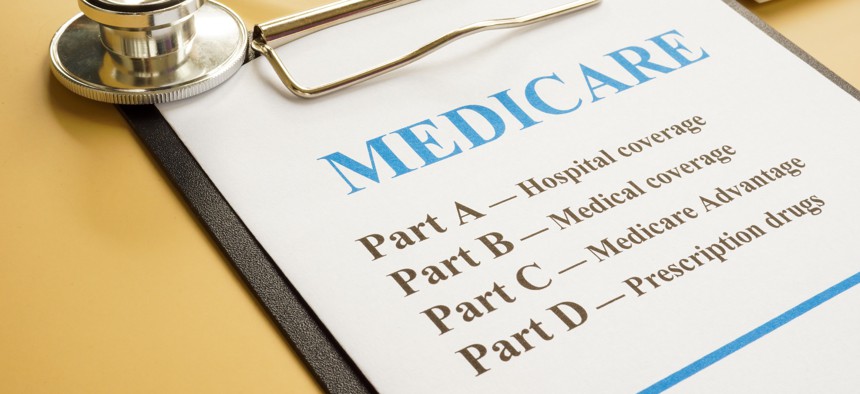
FEHB coverage remains intact even if you choose to decline Medicare Part B, but enrolling in Part B may help reduce overall medical expenses. designer491 / Getty Images


FEHB and Medicare Part B: Do FEHB plans reduce coverage if you don't sign up for Medicare?
Making decisions on whether to enroll in Medicare for many federal retirees could depend on how it interacts with existing health insurance coverage.
Many federal retirees wonder whether their Federal Employees Health Benefits coverage changes when they become eligible for Medicare at age 65. One of the most common concerns is whether FEHB reduces or limits benefits if a retiree chooses not to enroll in Medicare Part B.
The short answer is no – your FEHB plan continues fully, and your coverage does not decrease. However, the way your benefits work can change depending on whether you enroll in Part B. This article explains how FEHB and Medicare coordinate, potential cost implications, and key considerations for individuals and married couples.
FEHB without Medicare Part B
If you keep your FEHB coverage and choose not to enroll in Medicare Part B, your benefits remain the same (including your copays, deductibles and provider networks) and FEHB continues to serve as your primary insurance in retirement. You will still pay your standard FEHB cost-sharing; the only thing you forgo is the additional cost protection Medicare would have provided. Importantly, no FEHB carrier reduces or drops coverage for retirees who decline Part B.
How FEHB and Medicare work together
If you decide to enroll in Medicare Part B after retiring, Medicare becomes your primary payer while your FEHB plan shifts to secondary coverage, often filling in many or all of the remaining costs. This coordination typically results in lower out-of-pocket expenses for covered services. However, while you are still actively employed, the coordination works in reverse – FEHB remains your primary insurance, and Medicare (if you choose to enroll) functions as secondary.
Why some retirees choose Part B
Many federal retirees choose to enroll in Medicare Part B because pairing it with FEHB can significantly reduce overall medical expenses. With Medicare paying first, out-of-pocket costs are often much lower, and FEHB typically provides secondary coverage that may eliminate deductibles or copays altogether. Certain FEHB plans also offer Medicare Reimbursement Accounts (available in options like Blue Cross Blue Shield, Government Employees Health Association and National Association of Letter Carriers) which can reimburse part or even all of the Part B premium. Additionally, retirees gain access to FEHB plan choices specifically designed to coordinate with Medicare, often at lower premiums. Together, these features can make the FEHB and Part B combination especially appealing.
Considerations for couples
Households with two federal retirees, or a federal retiree and a covered spouse, may need to consider additional factors when deciding about Medicare Part B. The best outcomes usually occur when both spouses make the same Medicare enrollment decision. If both spouses enroll in Part B:
- Both benefit from Medicare as the primary payer.
- Both can use Medicare Reimbursement Accounts, when available.
- FEHB secondary coverage typically becomes more predictable and lower-cost.
- Coordinating coverage may allow a household to save costs by dropping to basic FEHB.
If only one spouse enrolls:
- Billing and payer rules differ between spouses.
- The spouse with Part B may pay very little out-of-pocket.
- The spouse without Part B continues to face full FEHB copays and deductibles.
- Only the spouse with Part B can use MRA reimbursement.
This uneven setup can make household medical expenses harder to project and less predictable.
Delaying Medicare Part B
Some retirees choose to delay Medicare Part B enrollment, but there are important considerations. If you delay after becoming eligible, you may owe a 10% lifetime penalty for every 12 months of delay, which applies to the base Part B premium. You can enroll later if your health care needs change, and once enrolled, you may switch to FEHB plans designed to coordinate with Medicare during Open Season. Key points to keep in mind:
- Delaying Part B may result in a permanent premium penalty.
- Active employment coverage can allow you to delay without penalty.
- Enrollment later allows access to Medicare-coordinated FEHB options.
Choosing coverage during Open Season
Each year during the FEHB Open Season, retirees should carefully review their coverage to ensure it continues to meet their health and financial needs. This includes evaluating annual out-of-pocket spending, Part B premiums and the availability of Medicare Reimbursement Accounts, any changes in health or new medical needs, eligibility for income-related Medicare premium adjustments and the differences between Standard and Basic FEHB plans when Medicare is primary. Regularly reviewing these factors helps ensure that benefits remain well-aligned with both health care requirements and budget.
Key takeaways
Ultimately, FEHB coverage remains intact even if you choose to decline Medicare Part B, but enrolling in Part B may help reduce overall medical expenses. For households with two federal retirees or a retiree and a covered spouse, the greatest benefits and most predictable coverage typically occur when both make the same health care decision. Those who delay enrollment without active employment coverage should be aware of potential lifetime penalties, while Open Season provides an opportunity to adjust enrollment choices as health needs and financial circumstances change. By carefully coordinating FEHB and Medicare, retirees can make the most of their benefits and better manage out-of-pocket costs.
Securities and advisory services offered through LPL Financial, a registered investment advisor. Member FINRA/SIPC. This material is for general information only and is not intended to provide specific advice or recommendations for any individual. There is no assurance that the views or strategies discussed are suitable for all investors or will yield positive outcomes.
You can also explore this topic further in our YouTube video.
Neil Cain is a certified financial planner with Capital Financial Planners. To discuss your investments, including your TSP, register for a complimentary Retirement Readiness Meeting. For topics covered in even greater depth, see our YouTube Channel.
NEXT STORY: Domestic TSP funds falter to close out 2025