

Olena Opishanska/Getty Images

Why federal HR modernization is failing employees
COMMENTARY | OPM’s Federal HR 2.0 consolidates systems, but without connected workflows and AI-driven experiences agencies may still see the same old results.
For decades, the federal government modernized Human Resources (HR) technology one system at a time. Each agency upgraded independently, the same problems solved over and over again. The result: fragmented tools, siloed data, rising costs and inconsistent service delivery.
The Office of Personnel Management (OPM)’s Federal HR 2.0 initiative changes this approach. By consolidating more than 100 legacy HR systems into a single governmentwide Core Human Capital Management (Core HCM) platform, it finally creates an authoritative source for workforce data across agencies. OPM deserves praise for its leadership.
But a system of record alone does not complete modernization. The problem is bigger than one system. Updating solutions without uniting disconnected systems and workflows will only lead to legacy outcomes. To deliver the efficiency agencies need, Federal HR 2.0 must go further and turn unified data into unified AI-powered employee experiences.
The problem: disconnected HR systems
The federal government spends more than $100 billion annually on IT and cybersecurity, with roughly 80% sustaining existing systems.
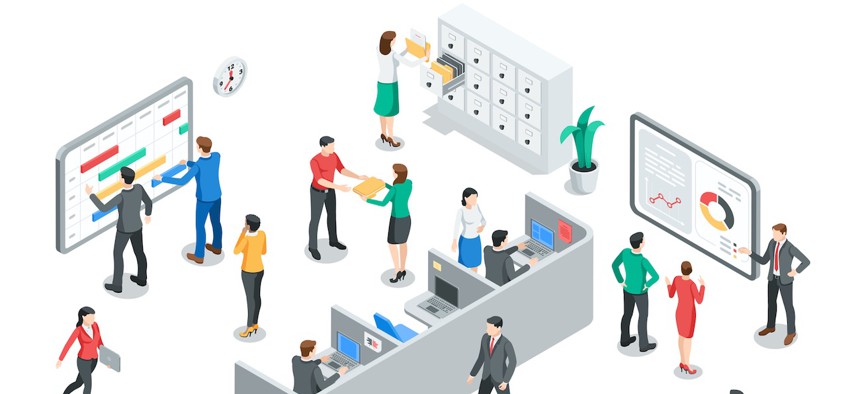
For employees, multiple disconnected systems create inconsistent experiences across onboarding, training and role changes. HR teams rely on manual workarounds to coordinate work across IT, security, finance and facilities. This fragmentation does not just slow operations. It creates compliance risk, delays mission-critical hiring and makes reliable AI adoption nearly impossible.
Federal HR 2.0 addresses this fragmentation. It establishes common data standards and processes across agencies, delivering real-time visibility into the federal workforce. This foundation improves workforce planning and security, reduces errors and eliminates redundant systems and maintenance costs. With trusted, authoritative data in place, agencies can act faster and make better decisions.
The path forward
Agencies do not need to modernize everything at once. Trying to do so usually stalls progress. Instead, start with a clear pain point: onboarding that takes months, offboarding full of security gaps or HR case management drowning in tickets. These early wins do more than solve immediate problems. They build organizational confidence and create a blueprint for scaling modernization across the agency.
Our experience tells us that technology alone will not drive success. The people doing the work every day need to help shape these systems. When employees are involved early, agencies avoid building solutions nobody wants to use. That early alignment translates into tangible improvements: faster onboarding, fewer manual handoffs, more automation, happy and productive employees and demonstrable cost savings.
Federal HR 2.0 provides agencies with something they desperately need: consolidated data and a foundation for modern HR operations. But that foundation is only the beginning. Real transformation happens when work flows seamlessly between systems, when HR connects to IT, finance connects to security and employees get what they need without bureaucratic headaches. This is where AI-powered orchestration matters. It turns unified data into unified action.
The foundation is being created. Agency HR and IT leaders must build on it to deliver real and lasting transformation for the federal workforce.
Jonathan Alboum is the Federal CTO for ServiceNow.