

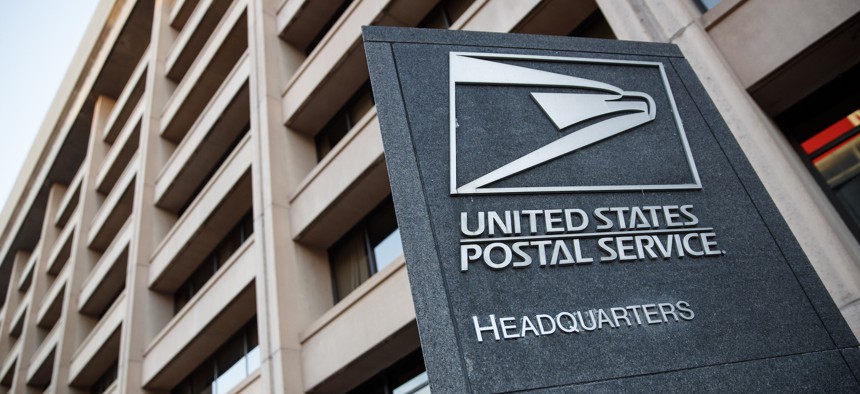
The U.S. Postal Service experienced a net loss of nearly $1.3 billion in the first quarter of fiscal 2026. Ting Shen / Xinhua News Agency / Getty Images





USPS posts $1.3B quarterly loss, as officials clash over fixes
Detailing its first quarter performance Thursday, postal leaders praised service improvements during the holidays season, while bemoaning the agency’s financial prospects.

The U.S. Postal Service on Thursday reported that it experienced a net loss of nearly $1.3 billion in the first quarter of fiscal 2026, as there continues to be a lack of consensus among postal leaders, stakeholders and lawmakers about how to fix the agency’s longstanding financial challenges.
Officials attributed the loss to a $634 million increase to workers’ compensation, among other spending hikes, paired with a $264 million reduction in operating revenue. In comparison, USPS saw a net income of $144 million during the first quarter of fiscal 2025.
USPS, however, experienced a net loss of $9 billion in fiscal 2025, and officials have projected that the postal agency will continue to operate in the red for fiscal 2026.
At a USPS Board of Governors meeting on Thursday, Postmaster General David Steiner and the board reiterated their argument that legislative and administrative reforms, such as raising the postal agency’s $15 billion statutory debt limit, are necessary to reverse these losses.
Steiner, who was appointed by the board in May 2025 reportedly with President Donald Trump’s backing, also requested last month that the Postal Regulatory Commission axe price caps for the system used to set prices for market dominant products (e.g. first-class mail, marketing mail, periodicals).
Postal stakeholders and lawmakers from both parties, however, have blamed USPS’ financial woes on Delivering for America, a plan started by former Postmaster General Louis DeJoy that he predicted would enable the agency to break even by fiscal 2023. The overhaul initiative generally entails slowing some delivery and increasing the price of certain products.
The inspector general for USPS found in a January report about Delivering for America that: “While the Postal Service has made meaningful investments in infrastructure, fleet modernization and pricing reforms, service performance has been inconsistent, and financial outcomes have fallen short of break-even targets.”
Steiner and the USPS board continue to back the plan, but former Rep. Kevin Yoder, R-Kan. — executive director of Keep US Posted, a nonprofit advocacy group that represents entities that rely on the mail — said in a statement Thursday that: “It’s abundantly clear the Delivering for America plan should be marked ‘return to sender.’”
Yoder predicted that USPS is headed for a “taxpayer bailout,” pointing out that Steiner has said the agency could run out of money by early 2027.
During Thursday’s meeting, Steiner also touted his initiative to auction off for private entities greater access to USPS’ final-leg delivery network, which he hopes could help stave off pending financial shortfalls.
The postmaster general reported that more than 1,200 companies and individuals have requested to bid.
“This is a model for how USPS can embrace flexibility and new thinking to grow,” Steiner said. “We have more in our control — more assets, more capabilities and more opportunities — that we can adapt and bring to market.”
Board members also praised holiday season metrics that showed mail and packages were delivered within 2.5 days on average compared with 2.8 days last year. Likewise, in comparison to the previous holiday season, there was a 23% decline in calls to USPS’ customer care center and a 44% reduction in customer service inquiries about packages.
There are currently five governor vacancies on the USPS board, as its four current members were appointed in the last administration.
Share your news tips with us: Sean Michael Newhouse: snewhouse@govexec.com, Signal: seanthenewsboy.45
NEXT STORY: Top Dems in Congress list ICE constraints they want in funding bill