

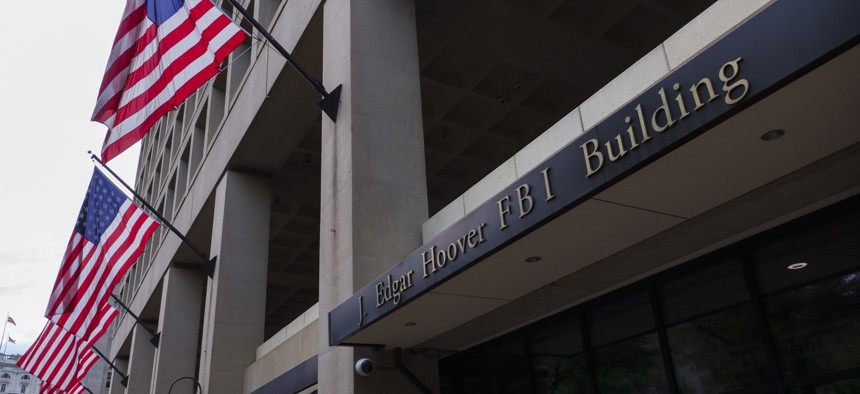
About 100 of assessment investigations were opened against news media organizations or members of those organizations between 2018 and 2024, the GAO report says. Kevin Carter / Getty Images




FBI gathered intelligence on reporters, religious orgs using ‘assessment’ authority, watchdog report says
The bureau also undercounts analysts’ non-compliance with assessment policies because it relies on self-reporting and infrequent audits, the sensitive GAO review adds.

The FBI used various intelligence-gathering techniques to examine a combined group of over 1,000 journalists, religious organizations, politicians and others using an authority that allows officials to gather data on individuals without the legal grounds to pursue a criminal investigation, according to a sensitive government report obtained by Nextgov/FCW.
The report, produced last month by the Government Accountability Office, is marked unclassified but for official use only. It measured the use of the bureau’s “assessments” investigative authority between 2018 and 2024, which spanned part of the first Trump administration and the Biden administration.
Authorized gathering methods for assessments include physical surveillance not requiring a court order, grand jury subpoenas for electronic communications information and confidential human sources and recruitment, according to the report.
The data indicates that, even at the assessment stage, agents can deploy a wide array of investigative tools without the evidentiary thresholds required for a warrant or other legal authorities used in investigations.
An FBI “assessment” is one of the bureau’s defined investigative phases that it can open without a criminal predicate, meaning there doesn’t have to be evidence of wrongdoing before activity begins. It is designed to let the FBI look into information or situations that may not yet indicate a crime or a threat, without needing to show a factual basis that a crime has been committed.
The findings could draw major scrutiny because they involve the use of a domestic law enforcement authority being used on journalists, religious institutions and elected officials, groups that traditionally receive heightened legal protections under the First Amendment. The authority does not require agents to establish grounds for a criminal investigation, though civil liberties advocates have argued that its use in domestic-facing contexts warrants strict oversight.
The findings also come amid heightened concerns about federal law enforcement relations with members of the press. Last month, the FBI executed a search warrant at the home of Washington Post journalist Hannah Natanson as part of an Espionage Act investigation.
Details of the GAO findings were first reported in Racket News.
The report measured uses of “Type I/II” and “Type III” assessment investigations. Type I/II seeks information “proactively or in response to investigative leads, relating to activities — or the involvement or role of individuals, groups, or organizations relating to those activities — constituting violations of federal criminal law or threats” to national security, the report says.
Type III cases “identify, obtain and utilize information about actual or potential national security threats or federal criminal activities, or the vulnerability to such threats or activities.”
A vast majority of the assessments in the measured timeframe were Type I/II cases. Between 2018 and 2024, about 100 of those assessments were opened against news media organizations or members of those organizations, the report says. Around 180 were opened against religious organizations or their members, while around 550 were opened against public officials, it adds.
Around 50 Type I/II assessments had an “academic nexus,” which are considered “a sensitive investigative matter if it involves issues related to the responsibilities of an administrator or faculty member employed by any college or university located inside the United States, provided the issue under assessment is related to the individual’s position at the institution,” according to the GAO report.
Around 20% of these Type I/II assessments were open for more than 180 days, the GAO report says. More specific details about the groups targeted were not provided.
The findings shed light on the scale at which certain FBI-tied national security tools can be deployed, and the categories of individuals that may be targeted. Even when used lawfully, the examination of journalists, religious institutions and political actors under intelligence authorities often triggers bipartisan oversight concerns due to the potential implications for press freedom, religious liberty and political activity.
In 2022, Reps. Nancy Mace, R-S.C. and Jamie Raskin, D-Md. sent a letter to GAO asking the watchdog agency to review the FBI’s assessment activities. Their offices did not immediately return requests for comment. Nextgov/FCW has also asked the FBI for comment.
The report also found that the FBI undercounts analysts’ non-compliance with assessment policies because the bureau relies on self-reporting and infrequent audits. It recommends the FBI improve methods to measure how often analysts do not comply with assessment procedures.
“The FBI relies on staff to self-report noncompliance with assessment policy requirements. The FBI noted that self-reporting likely undercounts actual noncompliance, but has not assessed if other tools could identify it,” the GAO report reads. “Assessing whether other tools exist would help the FBI determine when assessments should receive compliance reviews.”
GAO says the FBI concurred with a recommendation that it assess whether tools besides self-reporting can be used to identify noncompliance of Type I/II and Type III assessments.
The Trump administration is locked in discussions with Congress and others over the renewal of a powerful foreign spying authority, Section 702 of the Foreign Intelligence Surveillance Act, which the FBI frequently uses. Section 702 expires in April unless renewed by Congress, and has faced scrutiny in part because of documented FBI misuses of the tool.