

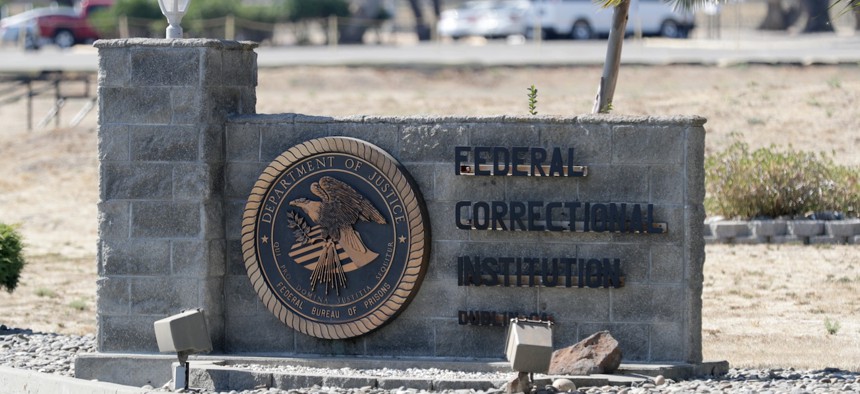
From 2014 through 2022, federal inmates logged nearly 4,000 complaints of sexual abuse against prison staff. Anda Chu/MediaNews Group/The Mercury News via Getty Images




More than 3-in-4 allegations of sexual assault against federal prison staff are going unresolved
Such allegations are spiking and the Justice Department is failing to implement key reforms meant to institute a zero-tolerance policy toward prison rape, GAO finds.

Allegations of sexual abuse against staff at federal prisons are overwhelmingly left unresolved after the Bureau of Prisons is unable to draw a conclusion on whether such incidents occurred, according to a new report that found the federal Bureau of Prisons is frequently ill-equipped to handle those investigations.
Allegations of rape and sexual misconduct against federal corrections officers by inmates have spiked in recent years, the Government Accountability Office found in its review of enforcement of the 2003 Prison Rape Elimination Act (PREA), and the bureau is in many ways failing to implement the law in the way Congress intended.
From 2014 through 2022, federal inmates logged nearly 4,000 complaints of sexual abuse against prison staff. Just 9% of those were substantiated by BOP, though 77% saw investigations end inconclusively. The agency proved the incidents did not occur in just six cases, or about one-tenth of 1%.
A similar trend emerged from sexual abuse allegedly committed by incarcerated individuals, with 81% of those cases reaching inconclusive findings.
GAO separately found federal prison guards faced around 3,000 allegations of sexual abuse from 2020 through 2024, a significant uptick in incident rate from prior years. From 2014 through 2022, BOP averaged 433 allegations against its staff per year. In 2023 and 2024, that spiked to 857 per year.
When an allegation of sexual abuse is made, the bureau deploys an evidence recovery team for and a local nurse conducts a rape kit if the alleged event had just occured. Employees said, however, that they often learn of allegations well after the fact, such as after an inmate transfers from a different facility.
GAO reported last year that BOP’s Office of Internal Affairs had 12,153 open allegations in its employees misconduct caseload, though the agency said most were not related to PREA violations. More than one-third of those cases had been open for at least three years. GAO noted the bureau has ramped up its efforts to address the backlog, including by deploying strike teams of investigators to facilities with particularly large caseloads.
Still, employees told the auditors that they have insufficient staffing for responding to allegations of sexual abuse, including a shortatge of investigators. Longstanding personnel shortages at the agency have led to less general supervision that in turn allows misconduct to fester, officials told GAO. The One Big Beautiful Bill Act that President Trump signed into law last year included $3 billion for BOP staffing, though criminal justice reform advocates have faulted the Trump administration for cutting PREA grants last year.
Abusers also employ tactics to avoid repercussions. Most of the corrections officers with whom GAO spoke said abusers know where they can go to evade cameras and some said the video quality is poor or not retained for a sufficient amount of time. Employees also said investigations against staff can take time, often years, to complete.
Corrections officers told GAO that false allegations of sexual abuse are prevalent and waste resources and tarnish the credibility of those reporting real incidents. Incarcerated individuals told the auditors that their fellow inmates make false accusations against prison staff as a form of retribution.
Still, corrections officers overwhelmingly told GAO they “would not hesitate to report sexual abuse perpetrated by employees against incarcerated individuals.”
PREA sought to establish a “zero-tolerance policy” for rape in U.S. prisons while tasking the Justice Department with instituting national standards for preventing, investigating and tracking such incidents. GAO noted sexual abuse “remains a significant problem” in federal prisons despite some progress under the law. The auditors titled a blog post accompanying their report “The Heinous Crimes Haunting Federal Prisons.”
Facilities that have been found to be fully compliant with the law have maintained the highest incident rates of sexual abuse in the country, GAO found. PREA requires ongoing audits of federal prison facilities, but GAO said current practice fails to detect ongoing sexual abuse. When the bureau contracts auditors for those investigations, it does not ensure they meet established requirements and they do not always have access to key documentation.
“Sexual assault is a heinous crime that can have lasting, harmful effects on survivors,” GAO said. “The issues identified through this report highlight that not all correctional facilities are meeting the intent of PREA.”
GAO cited BOP for a slew of additional failures, including its decision to only focus on cultural issues at women’s facilities and not men’s. It noted the bureau does not publish or analyze uniform data across the bureau to identify trends.
Jolene Lauria, the Justice Department’s assistant attorney general for administration, said BOP agreed that it must assess its approach on PREA enforcement and vowed to implement all of GAO’s recommendations. Various hiring initiatives will address staffing shortages that lead to coverage issues, officials said, and the agency will look at bringing on staff with specific experience in data analysis. It will also ensure the third-party investigators who conduct PREA audits have access to the documentation they need and review their training and guidance materials to enhance detection of ongoing sexual abuse.
If you have a tip that can contribute to our reporting, Eric Katz can be contacted ekatz@govexec.com or securely at erickatz.28 on Signal.
NEXT STORY: Agencies doled out $186B in improper payments last year, GAO says