

Thidarat Suteeratat/Getty Images


Scammers are making the government harder to trust
COMMENTARY | As government impersonation scams proliferate, agencies face a growing challenge: convincing Americans that legitimate calls, texts and other messages are actually from the government.
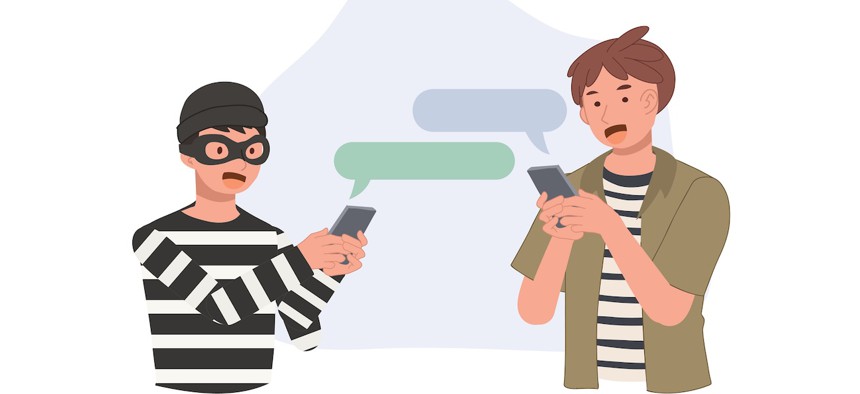
“Your vehicle has an unpaid toll. Pay now to avoid late fees and legal action.” Countless Americans have received some form of this text in recent years. Unfortunately, it is part of a pattern.
In 2025, there was an 87% increase in government impersonation scams reported to the FBI. Americans lost about $920 million that year to criminals posing as government agencies, up from $789 million in 2024, according to the Federal Trade Commission (FTC).
And now, scammers are impersonating FBI employees to target former scam victims. In the long run, without firm enforcement, these scams will further erode trust in government, making it harder for agencies to do their jobs.
Scams targeting Americans have exploded since 2020, but imposter scams are among the most worrying. Scammers exploiting the authority of the government are eroding the trust necessary for legitimate government communication.
A call or text claiming to be the IRS or a state toll authority can cause a victim to act impulsively, fearing penalties or legal action. But after repeated communication attempts from multiple scammers, Americans may no longer trust legitimate government communication.
The FBI has also warned about scammers using AI-generated voice messages to impersonate senior U.S. officials, a capability that will only become cheaper and more convincing over time.
Meanwhile, a new survey confirms that federal complaint data captures only a fraction of the problem. Gallup estimates 15 million Americans, or roughly 6% of adults, were personally scammed in 2025, for a total toll of about $68 billion, across all types of scams.
That is more than four times the amount reported to the FTC for the same year. Only around 13% of victims reported their scam to a federal authority, and nearly two-thirds said they would not know where to report a scam.
Many who stayed silent did not think reporting would help them get their money back, reflecting a lack of confidence in the reporting process. After all, 82% of Americans surveyed said the government is doing too little to prevent scams.
Yet despite public sentiment, it would be unfair to claim the government has been only a bystander in solving scams. The FTC’s Government and Business Impersonation Rule gives the agency authority to sue impersonators and seek civil penalties of up to $53,088 per violation.
In the two years since the rule was finalized, the FTC has brought a dozen enforcement actions and recovered more than $70 million for consumers, including cases against fake tax-debt-relief operations posing as the IRS.
This is just one of many government-led initiatives to stem the tide of scams, like those from the Treasury Department, Justice Department and the White House.
Beyond enforcement, Health and Human Services started a public-private partnership aimed at America’s seniors.
The “Never Ever” campaign informs them that the government will never demand payment via a payment app, cryptocurrency, wire transfer or gift card, and it will never threaten to suspend benefits unless someone pays immediately. This solution at least attempts to head off scammers instead of relying on retroactive enforcement.
But whack-a-mole and after-the-fact solutions are poorly suited to reducing the threat or rebuilding Americans’ trust.
A more durable solution starts with the federal government bringing its full weight to bear on scam operations themselves and allowing agencies to leverage the same AI tools that are used against victims. It also means holding accountable the communication channels where scams most frequently reach Americans, including phone calls, text messages and social media, and incentivizing them to block scam communications from ever occurring in the first place.
This may include introducing stronger digital ad verification standards at the platform level and greater legal responsibility for the telecom middlemen who allow scam callers to connect to consumer-facing carriers.
Finally, Americans are clearly lost when it comes to reporting. This is why a single, consumer-friendly system is vital for reporting, tracking and possible restitution, both for Americans and policymakers who need accurate data to properly address the problem.
None of these fixes work in isolation, nor are the solutions an exhaustive fix. Each chips away at the problem while scammers find whatever gap is left open.
What’s needed is a comprehensive response that connects enforcement, communications accountability and consumer protections into a single coordinated strategy, rather than a patchwork of agencies each managing their own slice of it.
Every unanswered official text and ignored call is a sign that Americans are starting to tune out the government itself, including the notices that are real. If people can no longer tell a legitimate IRS message from a scam, many will stop responding, period, and no FTC fine will be able to buy that trust back.
Caroline Melear is a Resident Fellow for Finance, Insurance and Trade with the R Street Institute.