





Blanche is confirmed. Now Congress needs to hold him accountable
COMMENTARY | A former Justice Department staffer argues that Congress must protect whistleblowers and demand answers when the agency crosses the line.
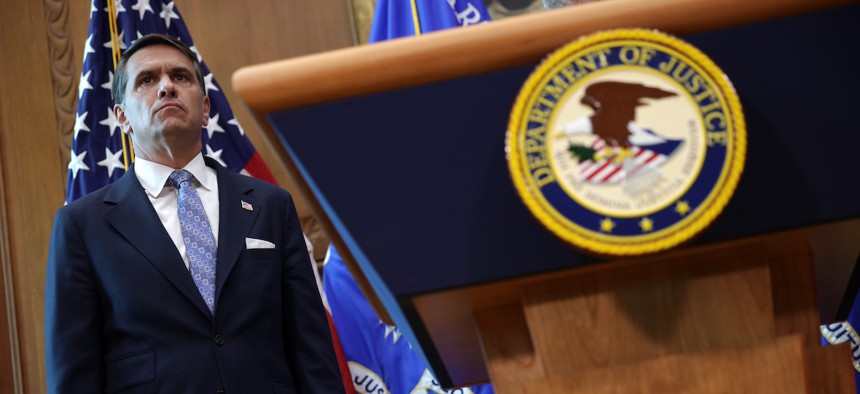
“I am not entirely satisfied where this is,” Sen. Bill Cassidy, R-La., said of the vindictive prosecutions pursued by the Justice Department under Todd Blanche. “I have no doubts I will have concerns in the future.” Hours later, he voted to confirm Blanche as attorney general.
This queasy acquiescence and the verbal gymnastics needed to justify his vote echoes the reasoning given days earlier by Sens. Thom Tillis, R-N.C., and John Cornyn, R-Texas, who were likewise on the fence about the confirmation. Tillis and Cornyn, both lame ducks like Cassidy, wrangled a milquetoast concession out of Blanche to feel more secure in their vote. Even then, the written order they demanded confirming the anti-weaponization fund’s cancellation did not legally bind the parties of the lawsuit, including President Trump.
That ambiguity was validated just an hour after Blanche’s swearing-in ceremony when Trump, asked whether the fund was still alive, said “that would be up to Todd Blanche.”
While Blanche has not indicated whether he will revive the fund, his loyalty to Trump is an established fact. As a top Justice Department leader, Blanche fired individuals who worked on cases disfavored by the president. He also oversaw the Weaponization Working Group, signed off on vindictive prosecutions, protected administration allies, obscured Trump’s involvement in Jeffrey Epstein’s illegal conduct, and shifted thousands of agents, attorneys, and analysts away from mission-critical work to support the president’s immigration agenda and 2020 election fraud obsession.
Senators voted to confirm Blanche with full knowledge of this record; that is their prerogative. But just as important — especially for those who expressed concerns over Blanche’s deference to the White House — is their duty to hold him accountable when he steps over the line.
That starts with making it safe for whistleblowers to come forward. Over the past year and a half, traditional avenues for employees to report abuses or misconduct have been constrained. DOJ’s Office of Inspector General appears to have retreated. The Office of Professional Responsibility’s staff shrank by nearly half, DOJ fired its head last year, and the number of new investigations are at a 20-year low, even as complaints have reportedly reached record levels. The Office of Special Counsel, which investigates misconduct across the federal government, is no longer trusted to be impartial. (This is why Justice Connection worked with Protect Democracy on a guide for employees who want to disclose wrongdoing to the press — an option that can still be covered by whistleblower protection laws).
Congress has a responsibility to investigate these offices to ensure internal checks on waste, fraud, and abuse work as intended, without partisan favor, loyalty tests, or the fear that stepping forward will ruin someone’s career.
More than that, Congress itself must once again be a safe place for whistleblowers. Before this administration, lawmakers on both sides of the aisle treated whistleblowers with respect and encouraged them to come forward. Sen. Chuck Grassley, R-Kan., in particular, built a reputation as a champion of whistleblowers, even those reporting allegations against Republican political appointees. Yet over the last 18 months, DOJ employees who have disclosed credible claims have been smeared and derided, including by Grassley.
Blanche himself has cracked down on employees’ ability to speak out. Under his watch, the department has fired hundreds of agents, attorneys, and support staff who were assigned to work on cases disfavored by this administration or who disagreed with investigative steps in other cases. He has also issued a new policy imposing stiff penalties on employees who post anything work-related on social media. The culture of fear inside DOJ is staggering. As Justice Connection's Peter Carr told Congress, “if an agent or prosecutor thinks they’ll be fired for their cases, they are less likely to accept difficult assignments. And they might start looking more at the long-term consequences of an investigation for their careers, rather than at the facts and the law. That’s not the justice we should want for our country.”
Congress needs to start meaningfully exercising its oversight powers. Lawmakers, especially those who voted for Blanche despite their reservations, must make clear that confirmation does not equal free reign. Instead, it should be treated as the beginning of a relationship of accountability that includes taking whistleblowers seriously and bringing to light abuses reported from concerned public servants inside the department.
Stacey Young is executive director of Justice Connection, an organization that provides direct support to Justice Department employees. Young was previously a DOJ lawyer for 18 years, and ran the DOJ Gender Equality Network.