

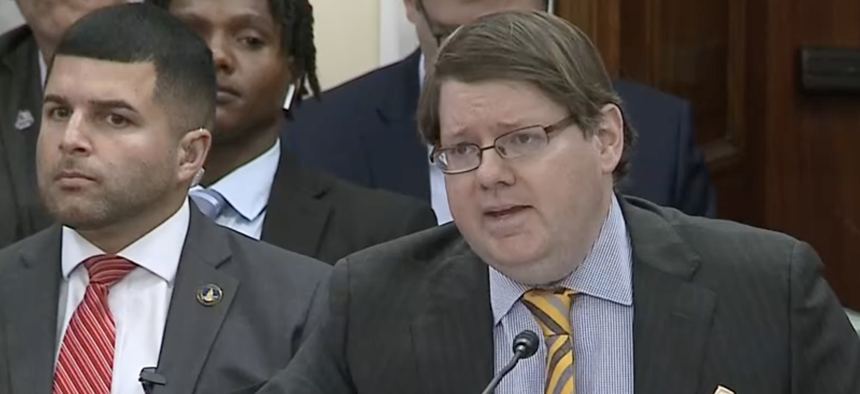
Agriculture Undersecretary Stephen Vaden (right) testifies about the department's reorganization plans in July 2025. C-SPAN/Screengrab GovExec




Tribal leaders bash USDA's plan to relocate thousands of staff and shutter offices
Agriculture's reorganization would create inconveniences and damage relationships the tribal governments have worked hard to establish, they told the department.

Tribal governments largely panned the Agriculture Department’s plan to relocate thousands of employees around the country and shutter some regional offices, saying during recent consultations the reforms would degrade long-established relationships and result in staffing shortages that negatively affect services.
Native populations will suffer the consequences if USDA’s efforts to relocate staff out of Washington and into five new “hubs” around the country leads to a brain drain at the department, the tribal officials said. It will also make meeting and communicating with USDA staff more difficult, they added, as they often travel from Indian Country to Washington anyway to meet with other government personnel.
USDA Undersecretary Stephen Vaden held the consultations in October as part of the department’s final steps before it implements its reorganization, which will see 2,600 Washington-based employees relocated to offices in in Raleigh, N.C.; Kansas City, Mo.; Indianapolis; Fort Collins, Colo.; and Salt Lake City, Utah. Vaden sought to assuage the tribal concerns by extolling the benefits of USDA’s plans, according to a summary of the meetings the department released this week, but declined to accept any of their proposed changes.
“Their concerns included the diminishment or elimination of gains from good working relationships, the loss of institutional knowledge specific to tribal issues and treaty obligations, losing coordination with leadership, and the effect on the management of local treaty resources,” USDA said in a summary of the tribes’ comments.
As part of its reorganization department is looking to slash regional offices across the country, offload several of its buildings including one of its Washington headquarters facilities and trim layers of management. It has yet to announce which employees will be forced to move and where they each will go, though Vaden has said he wants the relocations to occur by the end of the summer. As he has since USDA Secretary Brooke Rollins first announced the reorganization last year, Vaden pitched the plan as necessary to rein in out-of-control staffing growth and place employees closer to the constituencies they serve. Currently, just 10% of USDA staff are located in Washington.
The concerns from tribal leaders echo many of those USDA received during its public comment period, during which just 5% of the more than 14,000 unique responses sent by employees, lawmakers and local governments were positive.
In their conversations with Vaden and USDA officials, tribal leaders voiced their consternation that they were not consulted until after the release of the reorganization plan. They repeatedly said the relocations would likely lead to a loss of staff among those who decline to move, which could “lead to a loss of expertise as well as previously fostered relationships.” Additionally, they said, staffing shortages “coupled with remoteness” could lead to disruptions in service.
USDA shed more than 16,000 employees last year as it offered various incentives for employees to leave government. Tribal leaders requested that key vacancies be filled before USDA moves forward with its plan, and some officials said the plan should be paused altogether until the department can more fully assess its impacts on Native communities.
Vaden agreed that the USDA relationships with tribes must remain strong, though he said more staff does not lead to that outcome. He suggested previous issues those governments had with USDA were a reflection of an overbloated bureaucracy.
“Closer proximity will promote the formation of stronger ties, foster collaboration to ensure more effective and efficient service delivery, and make USDA far more accessible to Indian Country than it currently is,” Vaden said.
The tribal leaders disagreed with the decision to move staff from Washington into the new hubs. They already must travel to the capital frequently, they said, and it is more convenient to have all the government officials with whom they need to meet colocated in one city. They reiterated that the moves will lead to staff attrition, which will in turn degrade their relationships with USDA.
“Mass relocations will destroy irreplaceable knowledge about treaty rights, forest conditions, and working relationships built over decades, and new staff unfamiliar with the land will make mistakes,” one tribal leader said.
Vaden countered that political staff and “key career employees” who work closely with those appointees will remain in Washington. He acknowledged, however, that senior-level staff will move to the hubs as that is where “decisions affecting people closest to them” should be made. Vaden said his hope is for the hubs to be a permanent fixture, not something that is eliminated by the next administration.
Staffing losses could be felt particularly acutely at the U.S. Forest Service, the tribal officials said, as shortfalls could negatively impact wildfire response. The tribal leaders also expressed distress over USDA’s plan to eliminate the Forest Service’s regional offices. Vaden said forest-specific employees would remain and USDA was only eliminating middle-management positions.
Multiple tribes expressed concern that USDA was using cost savings to justify the changes, as they said that should not be a consideration when it comes to the U.S. government’s treaty obligations. They asked for a detailed list of all positions being relocated or eliminated and an assessment on the impact to tribes of each change to programs and staffing levels. They also requested a recruitment timeline for all tribal-serving positions.
USDA has not yet informed employees of the specifics of their plans, but such announcements are expected in the coming weeks or months.
Share your news tips with us: Eric Katz: ekatz@govexec.com, Signal: erickatz.28
NEXT STORY: Treasury to take over defaulted student loans as Education Department winds down