Insights


How to prevent expense fraud in an AI Driven World
<p>As state and local government organizations modernize digital payments and begin cautiously exploring AI, they’re still operating with legacy systems and limited staff capacity, while navigating evolving policies. That doesn’t reduce risk; it makes it harder to detect.</p> <p>Each case of fraud threatens your budget, increases audit scrutiny, and strains already limited resources. These incidents can also erode public trust and raise concerns about the use of taxpayer dollars.</p> <p>As fraud evolves, so must modern fraud prevention strategies. In this eBook, you’ll learn</p> <ul> <li>The emerging causes and trends of fraud</li> </ul> <ul> <li>The rising role of AI in fraud detection and prevention</li> </ul> <ul> <li>5 steps for improving risk management</li> </ul> <ul> <li>How SAP Concur can help you build resilience</li> </ul>


Defense Software Delivery Is Broken. Here's the Playbook to Fix It.
Written by Bryon Kroger, Founder and CEO of Rise8


A production powerhouse for US Navy radars
Raytheon’s Radar Development Facility: Delivering fast, smart and at scale
State & Local Government: Building Resilient Communities Through Smarter Energy Infrastructure
<p>Municipal leaders face increasing pressure to modernize aging infrastructure, control rising energy costs, and meet sustainability goals. This resource highlights proven approaches to delivering energy and infrastructure upgrades, drawing on real‑world case studies and testimonials. Learn how communities are reducing operating costs, strengthening resilience, and improving services through innovative financing and modernization strategies.</p>







The future of federal IT: Smarter solutions for efficient government.
<p>Financial and oversight agencies face growing pressure to modernize systems, safeguard public funds and deliver mission outcomes with greater speed and accuracy. This eBook explores how unified visibility, real-time insights and automation help federal IT teams strengthen operational resilience, streamline data workflows and reduce risks across complex financial ecosystems.</p> <p>It also highlights mission-critical challenges; including the rising cost of fraud, waste and abuse; and shows how Splunk's analytics and security capabilities help agencies detect irregularities earlier, improve payment integrity and reinforce trust in federal financial programs.</p> <p>Download the white paper to see how smarter IT protects public dollars and powers smarter government.</p> <scribe-shadow data-crx="okfkdaglfjjjfefdcppliegebpoegaii" id="crxjs-ext" style="position: fixed; width: 0px; height: 0px; top: 0px; left: 0px; z-index: 2147483647; overflow: visible; visibility: visible;"></scribe-shadow>
Efficiency, After a Year of DOGE
<p> <style type="text/css"><!--td {border: 1px solid #cccccc;}br {mso-data-placement:same-cell;}--> </style> Nextgov/FCW explores the impact of DOGE's efforts from its first year of implementation, and takes a look at what's upcoming.</p>
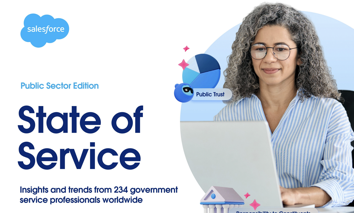
State of Service: Public Sector Edition
<p><strong>Insights and trends from 234 public sector service professionals on AI-driven service modernization.</strong></p> <p>Public sector organizations are being asked to deliver faster, more consistent service while operating under tight budgets and growing demand. AI is becoming a critical lever — helping organizations modernize service delivery, reduce administrative burden, and better support frontline teams. Read the report to discover how:</p> <ul> <li><strong>Service demand is surging.</strong> 81% of service professionals say constituent expectations are mounting.</li> <li><strong>AI is becoming foundational to service delivery.</strong> 35% of public sector organizations already use AI, with many planning broader adoption.</li> <li><strong>AI is delivering measurable gains for frontline teams.</strong> 72% say it helps them better serve constituents.</li> <li><strong>AI agents signal the next leap forward.</strong> Nearly six in 10 say they would be highly useful for handling routine inquiries.</li> </ul>
How Dash Cams Reduce Risk and Deliver Clear ROI for the U.S. Public Sector
<p>For government agencies, dash cams are no longer a nice-to-have—they’re a must for public safety, operational efficiency, and cost savings.</p> <p>This report analyzes survey data from your peers—400 U.S. public sector leaders across federal, state, and local government, as well as educational institutions—to reveal the real-world impact of dash cam adoption. Inside, you’ll discover how this technology delivers three key outcomes: clear ROI for taxpayers, enhanced operations and service delivery, and critical safety improvements that protect both your teams and the citizens you serve. This report provides the data and clarity you need to champion this critical technology for your agency.</p>


Delivering Victory Through Fuzing Precision and Scale
Jeff Zotti, Vice President and General Manager, Missile Production Programs, L3Harris Technologies
The Next Five Years of Fraud: We Better Get Ready Now
<p>This report draws on insights from a recent cross-branch roundtable on the evolving fraud threat, informed by testimony from GAO, Treasury, and PRAC, and by new private-sector analysis of identity based fraud patterns. Roundtable participants included a wide array of federal executives who play key roles in fraud prevention, including from numerous federal agencies and both the House of Representatives and the Senate.</p> <p>Taken together, the evidence suggests a clear direction: prevention must move earlier in the payment lifecycle; data access and privacy must be treated as non-negotiable traits rather than tradeoffs; and incentives must be recalibrated so that agencies are expected to accurately report and prevent fraud before it occurs.</p>
From Presence to Performance: Rethinking Federal Workspaces for Mission Readiness
<p>Bringing teams back to the office is creating new opportunities—and exposing some surprising gaps in how we measure success. While 76% of federal agencies now have their staff working in person, almost half still focus on attendance rather than real outcomes. Only 16% are actually tracking whether employees are collaborating or being productive.</p> <p>Help your agency move beyond counting heads and start driving mission results. This whitepaper offers a fresh look at data-driven strategies and practical steps for rethinking modern federal workspaces. Download your copy and see what’s possible when you measure what truly matters.</p> <scribe-shadow data-crx="okfkdaglfjjjfefdcppliegebpoegaii" id="crxjs-ext" style="position: fixed; width: 0px; height: 0px; top: 0px; left: 0px; z-index: 2147483647; overflow: visible; visibility: visible;"></scribe-shadow>