






Where Are They Now? Where the Players in the GSA Scandal Have Landed
Two officials fired in the wake of the conference-spending revelations have since been reinstated with back pay.

The General Services Administration shook up its staff in the wake of 2012 revelations of lavish spending at a Las Vegas conference, in what some have called a heavy-handed response to the scandal. Here is a look at where some of the officials fired in the aftermath of the inspector general’s report on the conference have ended up:
 Martha Johnson, former administrator: Johnson resigned on April 2, 2012, the day the IG’s final report came out. She has released two books since her departure from the federal sector; one, a novel, and the other, a leadership guide. Her fall from grace has been hard and swift, according to a recent profile in The Washington Post. “This is a story about taking the fall in Washington and what happens when the news cycle moves on,” Post reporter Lillian Cunningham wrote of Johnson last year. “When power evaporates and you’re just a 61-year-old without a job.” Johnson has struggled to get consulting work because she’s “toxic,” and can be found making unpaid speaking appearances in front of crowds of 30 people talking about “learning from failure,” the profile said.
  Jeff Neely, former regional commissioner: Neely was perhaps the GSA employee most centrally connected to the lavish spending found in the IG report, as he was charged with organizing the Las Vegas conference. GSA suspended Neely after the report came out. In September, Neely was indicted on charges of fraud brought by the federal government. He is accused of repeatedly -- in Las Vegas and other locations around the globe -- “submitting false and fraudulent charges” to the government for reimbursement. If convicted, Neely faces a maximum sentence of five years imprisonment, and a fine of $250,000 for each violation. At the time of his indictment, Neely was still on GSA’s payroll, according to Law360.
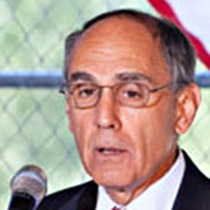 Robert Peck, former Public Buildings Service commissioner: Peck was fired immediately when the report was released, and he now works in the private sector as the Government Practice Area Leader at the real estate firm Gensler. He told Government Executive he is adjusting well to private-sector life, as -- having spent half his life outside federal space -- he was not a career government guy. While Peck was drawn to the idea of federal service, he knew what he was getting himself into. “I don’t think there’s a higher calling than public service,” Peck said, “but it has its risks, particularly if you’re a political appointee like I was.”
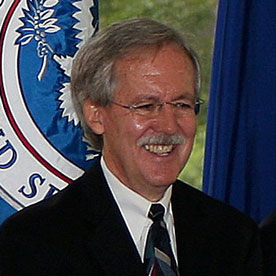 Paul Prouty, regional commissioner: Prouty was fired after being placed on administrative leave. Recently, however, the Merit Systems Protection Board ordered Prouty reinstated with back pay, saying managers “cannot be held responsible for the improprieties of subordinate employees.” Following a GSA appeal, MSPB’s central board upheld an earlier decision reached by an administrative judge. Prouty, who has worked at GSA for 44 years, including a stint as acting administrator, is now back at his post in Denver, Colo.
 Jim Weller, regional commissioner: Weller was also fired after being placed on administrative leave. In a case decided by MSPB’s central board in conjunction with Prouty’s, Weller was also reinstated with back pay. Alan Lescht, Weller’s attorney, told Government Executive he expects a smooth transition for Weller, as he is a “long-time public servant” who “knows the people” at GSA. “I think he’s really looking forward to going back to work,” Lescht said. Weller has already returned his GSA office in Fort Worth, Texas.
- Robin Graf, former regional commissioner: Graf was placed on administrative leave, and has since entered retirement.
 Stephen Leeds, former senior counsel to the administrator: Leeds -- also a former acting administrator -- was fired immediately upon the release of the IG report. Since his termination, Leeds has worked for the law firm Rogers & Hardin LLP and Sustainability Consultants LLC.
NEXT STORY: What’s It Going to Be This Year? Doing or Being?