Perceptions About Health Care Spending Are Wrong
The conventional wisdom about government health care spending misses the mark.
This sentence is a pithy summary of the centrist conventional wisdom about taxes, spending, debt, and health care:
"The political impasse facing the U.S. arises from one simple reality: Americans want an increasing government contribution to health care, but don't want to pay for it."
That's James Hamilton, an economic professor at the University of California, San Diego, at his excellent Econbrowser blog. It's an utterly reasonable-sounding judgment that can lead you to the wrong conclusion. Health care isn't just a government spending problem. It's an everybody's-spending problem.
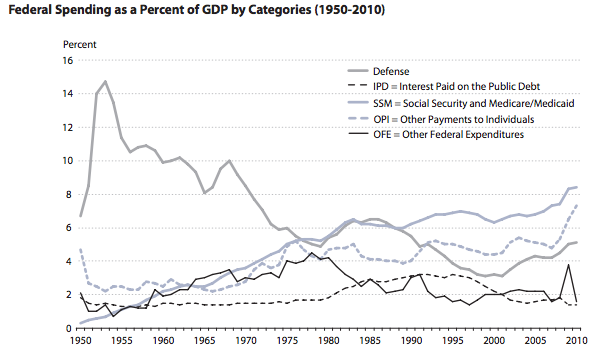
First, some basic facts about government spending on health care. Federal medical spending as a share of GDP has increased from about 1 percent of GDP in 1950 to almost 9 percent of the economy today.
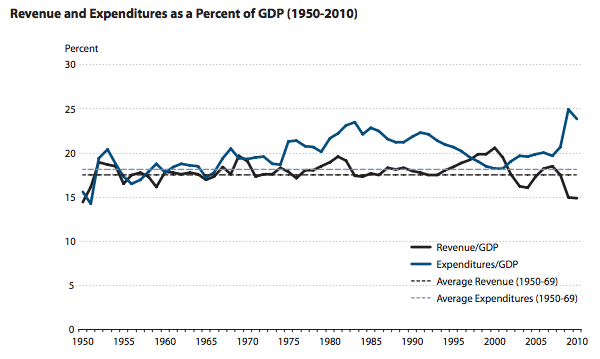
Meanwhile, tax revenues have clung stubbornly to their long-run 19 percent average...