




TSA chief sketches out the future of airline passenger screening
John Pistole also offers preview of issues likely to come up in collective bargaining talks this fall.
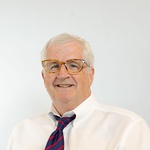
A decade from now, the screening of airline passengers could be far less intrusive, Transportation Security Administrator John Pistole said on Wednesday. The so-called Checkpoint of the Future, which the International Air Transport Association conceives as three quickly accessed sensor-lined tunnels that segregate passengers into low, medium and high risk "would allow you to keep your jacket and shoes on," Pistole said. "It's a great concept, but the technology is not there yet," and so for now intelligence remains TSA's best tool for preventing terrorism.
Speaking at a Sept. 11 anniversary event hosted by the Newseum in Washington, Pistole also addressed the collective bargaining talks set to begin this fall between his agency and the American Federation of Government Employees, the union TSA employees elected in June. Any changes arising from those talks "won't be apparent to passengers," he said. They will deal with such issues as "how we evaluate performance, bids on shifts and changes in uniforms."
With its 60,000 employees spread out among 450 federalized airports, Pistole said, TSA has improved training and has moved from a one-size-fits-all approach to "one that uses intelligence and multiple layers of security to make informed judgments about screening."
The agency strives to react to each new wrinkle in terrorist tactics, he said, mentioning the nonmetallic explosive that the "underwear bomber" used on Christmas Day 2009 in his unsuccessful attempt to foil metal detectors. Pistole also noted ink cartridges used to hide explosives in cargo and reports that terrorists are planning to surgically implant explosives inside their bodies.
When asked by the audience of tourists and journalists whether TSA can dispense with what some see as a wasteful practice of searching children and elderly passengers for bombs, Pistole said, "We know children are not terrorists. But unfortunately, terrorists don't follow our society's norms. We know that two 10-year-olds have been used, and recently an 8-year-old" was pressed into service by the Taliban to deliver a bomb. "There have been two suicide bombers who were 64 years old and two others even older on the terrorist watchlist," he added. "There are ways to screen children with their parents to make sure there's no bomb," he said. But TSA plans to stick with counterterrorism methods that to terrorists might seem "random and unpredictable."
Though TSA has had useful discussions with Israeli officials about their famously thorough airport screening approach, which relies on active engagement with passengers, Pistole said the U.S. Constitution's guarantees of privacy limit the extent to which TSA can adopt Israeli methods.
Acknowledging that TSA is sometimes portrayed unflatteringly in the news media, Pistole noted that his employees perform 1.8 million screens a day -- 2 million on holidays -- and have screened 6 billion passengers since 9/11. "There's bound to be some things on which we could have done a better job, but they have to be viewed in context," he said.
"There are no guarantees in this business," Pistole said. "We're in the risk mitigation and management business, not the risk elimination business."
Pistole said TSA gets excellent cooperation from commercial airlines, airport authorities and associations in pursuing collaborative solutions to security challenges, even though some changes cost the airlines money. Sixteen airports, he noted, have opted for privatized security screening, and even though this costs taxpayers more to supervise, TSA is interested in learning from their best practices. "That being said," Pistole added, "I see TSA as a U.S. government counterterrorism agency that was created to get information out quickly, not to negotiate new contracts."
Pistole, who spent 26 years with the FBI, recalled his own whereabouts on Sept. 11, 2001. He was on duty inspecting an FBI office in Syracuse, N.Y., and was in a judge's office when he saw the television image of the first plane hitting the World Trade Center. He immediately traveled to the FBI's Boston office to investigate the hijackers who had traveled from Portland, Maine, through Boston's Logan airport.
Asked if TSA agents are being trained to be nicer, Pistole said, "There is a customer service aspect to the training, but it has been second to the security training." He added that TSA is working to make employees more collaborative, using the public's feedback from the TSA website. "They recognize that the majority of travelers don't pose a threat," he said.