
Insights
Powering progress: How agentic AI is transforming campuses and communities
<p></p> <p>From city halls to university campuses, leadership teams have long struggled to translate massive data stores into actionable value. Legacy infrastructure, rigid procurement models and expensive technology overhauls have often stalled progress. Today, that frustrating paradigm is finally breaking down. The emergence of agentic AI and full-stack cloud ecosystems — technologies capable of executing complex, multi-layered workflows — has brought state, local and higher education (SLED) agencies to the edge of a “Cambrian explosion” of new capabilities, said Brad Hoffman, director of central U.S. SLED at Google Public Sector. Download to learn more.</p>
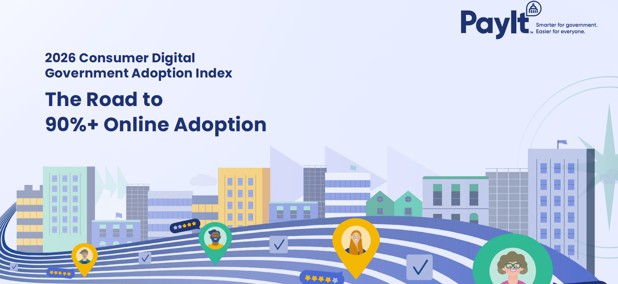
2026 Consumer Digital Government Adoption Index
<p></p> <p>Residents expect government services to work as easily as everything else online. The 2026 Consumer Digital Government Adoption Index surveyed 1,038 U.S. residents about their experiences with digital government services and AI in public service delivery. One finding: Gen Z is most likely to abandon a digital task, and 22.3% discover government services through AI search. Download to learn more.</p>
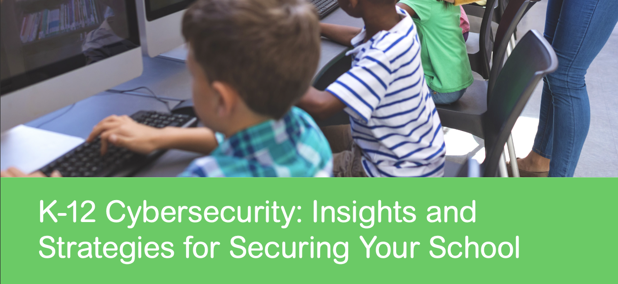
K-12 Cybersecurity: Insights and Strategies for Securing Your School
<p>As technology becomes increasingly integral to teaching and learning, the role of K-12 IT professionals, with their unique expertise, has never been more critical—or challenging. The digital landscape offers boundless opportunities for innovation in education, but it also presents a complex array of cybersecurity threats that can jeopardize the safety of students, the privacy of data, and the integrity of educational infrastructures.</p>


Inside GA-ASI’s ‘flying laboratory’
GA-ASI’s FQ-42 brings real-world, combat-ready technology to the battlespace.
The Local Government Playbook for AI
<p></p> <p>Our nation’s cities are experiencing a defining era of innovation as artificial intelligence becomes an operational pillar. Today, the challenge for our nation’s leaders is no longer exploring individual AI solutions or use cases, but understanding how to unify them into a connected, AI-driven technology stack. This means breaking down silos, establishing guardrails, and building the necessary public trust to scale AI safely and securely. We’ve created this playbook to both help you take your first major strides in operationalizing AI and inspire you to imagine what the future could look like. City government shapes daily life for all citizens, and this transformational era has the potential to enhance service delivery and improve quality of life. Download to learn more.</p>
Balancing innovation and security: A framework for federal AI
<p>AI is rapidly emerging as a force multiplier across the federal government. Yet as AI programs deliver benefits to the ender user, these benefits are often contrasted by stories of containment failures. Amid these competing narratives, federal leaders must chart a path toward responsible governance that prioritizes both security and innovation. Download "Balancing Innovation and Security" to learn how.</p>


Between the ledger and the lever
Distilling high-level governance frameworks into concrete mechanisms starts with documenting internal principles and putting pen to paper.


Agentic AI in Government: Moving from Experimentation to Operational Impact
This white paper summarizes an off-the-record roundtable discussion among government and industry leaders regarding the future of agentic AI in the public sector.
Health Technology: Relaunch of VA EHR
<p>As the VA relaunches its Electronic Health Record modernization effort, explore the implementation progress, interoperability goals and implications for veterans’ healthcare delivery.</p>


Best Dates to Retire in 2027
<p> <style type="text/css"><!--td {border: 1px solid #cccccc;}br {mso-data-placement:same-cell;}--> </style> As our most anticipated release of each year, Government Executive shines a light on the most advantageous dates to retire in 2027.</p>


Altering the adversaries’ calculus with the FQ-42 Vengeance CCA
Semi-autonomous control means the FQ-42 Vengeance Collaborative Combat Aircraft (CCA) delivers operational dominance even in denied conditions.
State Workforce Report 2026: Data, Trends, and the Constraints Shaping Government Hiring
<p>State public sector employers are navigating workforce shortages, changing applicant behavior and growing pressure to modernize hiring. Indeed’s latest public sector workforce report brings together labor market data and practical insights to help leaders understand today’s talent landscape. Explore trends in job seeker demand, skills, pay and technology that inform public-sector recruiting and workforce strategy.</p>

Federal Workforce Report 2026: Data, Trends, and the Constraints Shaping Government Hiring
<p>Public-sector employers face a labor market shaped by changing job seeker expectations, skills needs and emerging technology. Indeed’s latest public sector workforce report examines key trends affecting government hiring and offers data-driven insights for workforce leaders. Explore labor market signals- and what they mean for recruiting, workforce planning and the future of public-sector talent.</p>
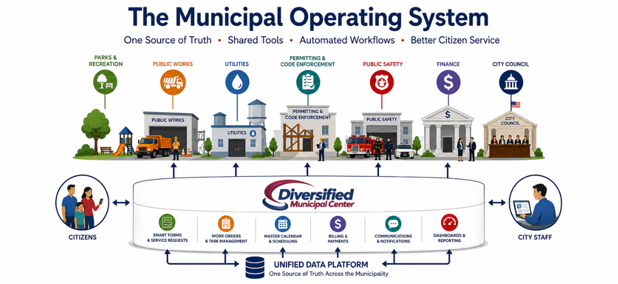
The Municipal Operating System
Connecting departments, automating work, and transforming citizen service.

How Tech is Changing Public Safety
<p>From AI-driven dispatch to smart infrastructure, <em>Route Fifty</em> examines how technology is reshaping how public safety agencies operate and respond.</p>
Mission Assurance Starts With Visibility
<p>End-to-end visibility across users, applications, networks and infrastructure is now foundational to mission assurance.</p> <p>For defense agencies, that means one platform to accelerate troubleshooting, improve performance across hybrid and tactical networks, strengthen zero trust posture, and make modernization decisions based on evidence rather than assumptions.</p> <p>Download to learn more.</p>
