
Insights
Symantec® Data Security Posture Management
<p>Organizations are struggling to gain a single, complete picture of all the data within their environment. The result of this struggle leads to blind spots and potential security gaps, where organizations leave sensitive information unattended for years. Businesses cannot effectively assess their data risk or implement adequate protection measures without this essential visibility into where data resides, who has access to it, and its criticality.</p> <p>Learn now the Symantec® Data Security Posture Management (DSPM) solution provides the necessary foundation for a data-centric security program. </p>
Threat-Aware Data Protection Keeps Your Data Safe from Malicious and Dirty Apps
<p>Data is always at risk whether it’s being endangered by unsuspecting employees or targeted by malicious actors. A dizzying array of fake apps masquerading as legitimate apps are trying to sneak into your agency network to exfiltrate sensitive data. Learn how your agency can stop malware and user-installed apps from exfiltrating sensitive data with unparalleled threat awareness and data loss prevention.</p>
Symantec® Data Loss Prevention Core Solution
<p>Keeping information safe and remaining compliant has never been easy. Today we face complex and evolving data security challenges that often translate into barriers for organizations, their employees, and the customers they serve.</p> <p>Learn how you can extend your agency's data loss prevention across the enterprise, detects insider risks, and protects critical information from exfiltration.</p>
Smarter Security For Leaner Budgets And Teams: The Tech Transforming US Government Operations
<p>In 2025, the US government established the Department of Government Efficiency (DOGE) to identify and eliminate waste across federal agencies. The resulting reductions in budget and headcount significantly constrained agencies’ ability to manage rapidly expanding compliance, security, and regulatory demands. With fewer resources to address increasingly sophisticated cyber threats, many agencies have experienced heightened vulnerability, greater operational risk exposure, and widening gaps in essential cybersecurity coverage. These constraints have forced leaders to reassess how they safeguard critical systems and data amid sustained pressure on resources.</p> <p>In December 2025, online survey of 212 cybersecurity decision-makers was conducted to understand the operational fallout and the approaches agencies are now taking. The research found that although the impacts of the 2025 reductions remain significant — particularly in staffing, capability coverage, and risk posture — agencies are beginning to shift toward more efficient, technology-forward security operations. Many are exploring emerging tools, including AI and automation, to help offset staffing shortages, reduce vulnerability, and support a leaner but more resilient cybersecurity model.</p>
Cloud App Security with Symantec DLP Cloud
<p>As your organization moves to adopt popular cloud apps and services such as Office 365, Google Workspace, and Salesforce, IT needs a way to apply security risk and governance controls around information that will reside in these cloud applications. Learn how DLP Cloud offers a multi-mode approach, reducing concerns about data security and compliance through the adoption of API inspection (using Securlets) and inline inspection (using Gatelets).</p>
Reinventing Security Operations for the Agentic AI Era
<p>As AI transforms the threat landscape, security operations must evolve. Traditional, siloed SOCs are struggling with data growth, alert fatigue, and sophisticated, AI-driven attacks.</p> <p>This e-book introduces the agentic SOC, a model unifying high-quality data, advanced analytics, and human-led AI to empower teams. In this guide Splunk and Optiv + Clearshark walk you through how to:</p> <ul> <li>Understand why data silos and lack of context hinder modern security operations.</li> <li>Discover the four essential imperatives for building a scalable, agentic SOC.</li> <li>Learn to prioritize high-impact threats while automating routine triage tasks.</li> </ul>

Six Questions to Ask Before Choosing Your Coverage
<p data-path-to-node="1" id="p-rc_60aff84f4d6630aa-33">Finding the right dental and vision plan takes more than just checking monthly premiums. <b data-index-in-node="2" data-path-to-node="1,2">GEBA’s Open Season Check-In Guide</b> breaks down what to look for—from deductibles and provider networks to family coverage and post-retirement continuity—so you can easily prioritize what matters most to your budget and future.</p> <p data-path-to-node="2" id="p-rc_60aff84f4d6630aa-34">Download the quick guide today to compare your options with confidence.</p>
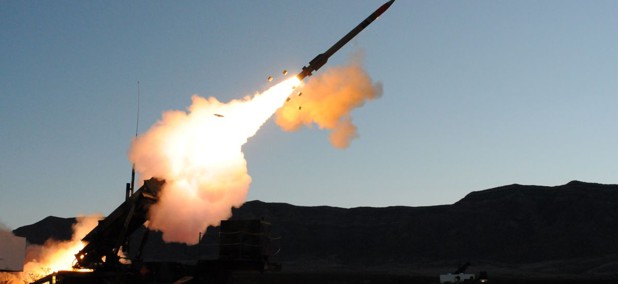

America can’t afford to slow its defense buildup
By: Ken Bedingfield, President, Missile Solutions, L3Harris Technologies
The agentic era: Empowering public servants to deliver tangible community impact
<p></p> <p>The public sector has entered a new era of innovation, where AI agents are not just automating tasks, but fundamentally reshaping how state and local government agencies operate, innovate and engage with constituents. Download this toolkit to explore how state and local government agencies can harness the power of agents to thrive in this new reality. Download to learn more.</p>
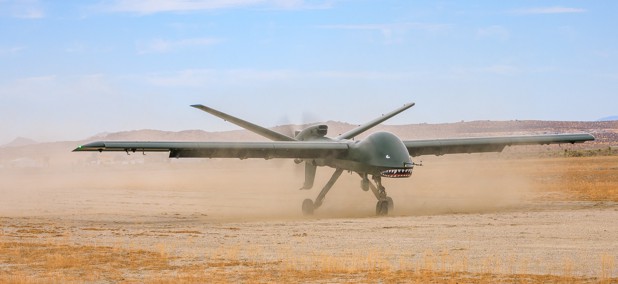

GA-ASI’s Gray Eagle® 25M and Mojave STOL UAS are ready today for the Army’s future fight
GA-ASI demonstrates at AUSA how its combat-proven platforms provide the U.S. Army with affordable, precise mass and expeditionary agility needed for the future fight.


The next big wave of autonomous jets is rolling out around the globe
The U.S. Air Force is leading the way into the next era of air dominance — but the world isn’t far behind.
Securing Mission-Critical OT: How Claroty Powers Compliance with the DoD/DoW’s Zero Trust for OT Framework
<p data-pm-slice="1 1 []">As adversaries increasingly target DoD/DoW operational technology networks, how can defense organizations protect critical infrastructure while keeping missions running? Explore how Zero Trust for OT can help identify vulnerabilities, detect threats and anomalies, disrupt attacks on industrial control systems, accelerate recovery and enable real-time threat intelligence sharing.</p> <p>Explore Zero Trust for OT</p>
How the State of Utah led government modernization into a new era
<p>Modernizing Government Operations: The State of Utah Blueprint</p> <p><strong>State and local governments are under growing pressure to modernize how they work</strong>, but for many agencies, the path forward is unclear. Legacy tools, siloed teams, and complex compliance requirements make change feel risky. The State of Utah decided to take the leap forward with modernization, and what they built became a model for what modern government can look like.</p> <p>By adopting <strong>Atlassian Cloud Enterprise</strong>, Utah unified its teams across agencies on a single, secure, cloud-first platform. The result was a technology upgrade and a fundamental shift in how the state delivers services, manages IT, and empowers its people to do their best work.</p> <p>What You Will Learn</p> <p>In this case study, you will learn how the State of Utah:</p> <ul> <li><strong>Broke down cross-agency silos</strong> and standardized collaboration on a connected cloud platform</li> <li><strong>Cut change review time by 90%</strong>, going from a two-week process to 24 hours</li> <li><strong>Built leaner, faster delivery practices</strong> that let teams accomplish more with fewer resources</li> <li><strong>Modernized their operations</strong> on a platform built for enterprise scale and government-grade security</li> </ul> <p>The State of Utah did not wait for a perfect moment to modernize. They moved with intention, brought their teams along, and came out the other side with a more efficient, collaborative, and resilient government operation. Whether you are evaluating cloud modernization, looking to connect disconnected teams, or trying to accelerate IT delivery across your agency, the State of Utah story offers a practical and inspiring blueprint for what is possible.</p>


5 Pillars of Decision Dominance
<p>Unmanned systems are reshaping operations across every domain—air, ground, surface, and subsurface—and the Army and Navy are accelerating investment in both offensive and defensive missions. But the opportunity goes well beyond the platforms themselves.</p> <p>Command-and-control, data processing, sensors, cybersecurity, and supply chain are all part of the equation, and all represent growing areas of demand.</p>


CCA points to more integrated, more capable uncrewed future
Networked, semi-autonomous platforms are delivering greater speed and lethality.
Governing AI agents: Four questions every government agency needs to answer
<p></p> <p>AI agents are beginning to take on more work across government, from internal processes to constituent-facing services and mission-critical operations. But for many agencies, security and identity concerns are making it difficult to move past the experimentation phase. Download to learn more.</p>
