Menu
  • Veterans' Preference
  • Impediments to Hiring
  • USAJobs
  • Firing Poor Performers
  • Passing the Buck
background image
 

THE PEOPLE PROBLEM

Having the right people with the right skills is fundamental to every agency’s mission. But just as important is the ability to remove those individuals who don’t work out. 

In November, Government Business Council, Government Executive Media Group’s research arm, surveyed 464 federal employees to learn how they perceive these vital functions. The results suggest employees are deeply frustrated with the personnel system, especially when it comes to firing poor performers—nearly 80 percent say termination procedures deter managers from booting failing employees.

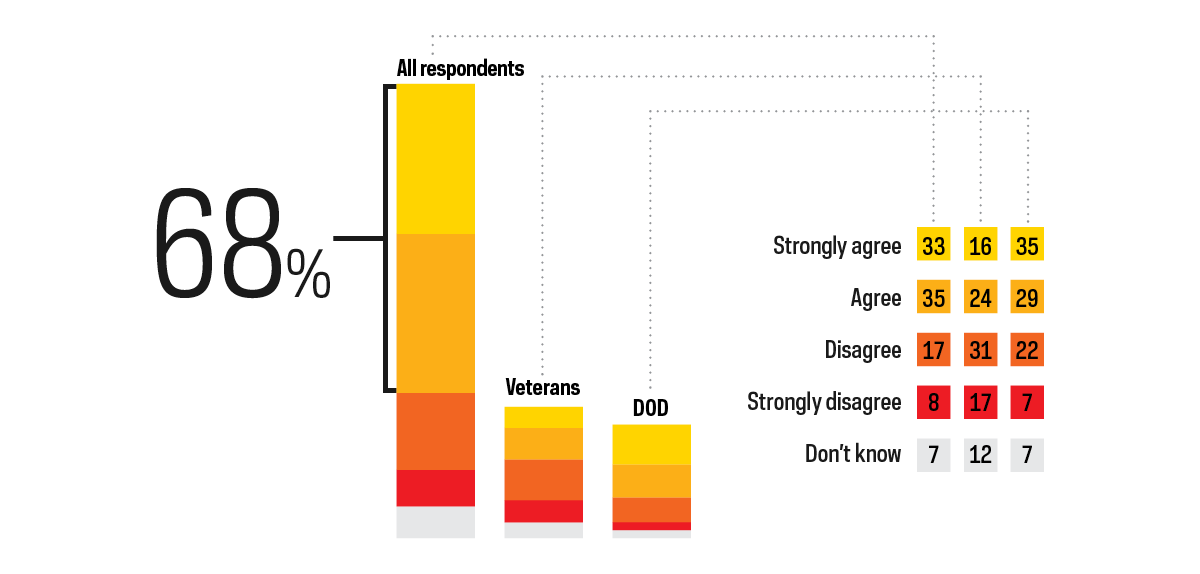
 

Veterans’ preference sometimes prevents the best candidate from getting the job.

While 68 percent of respondents say veterans’ preference sometimes prevents hiring the most qualified candidates, fewer veterans and Defense Department respondents felt that way—40 percent and 58 percent respectively.  


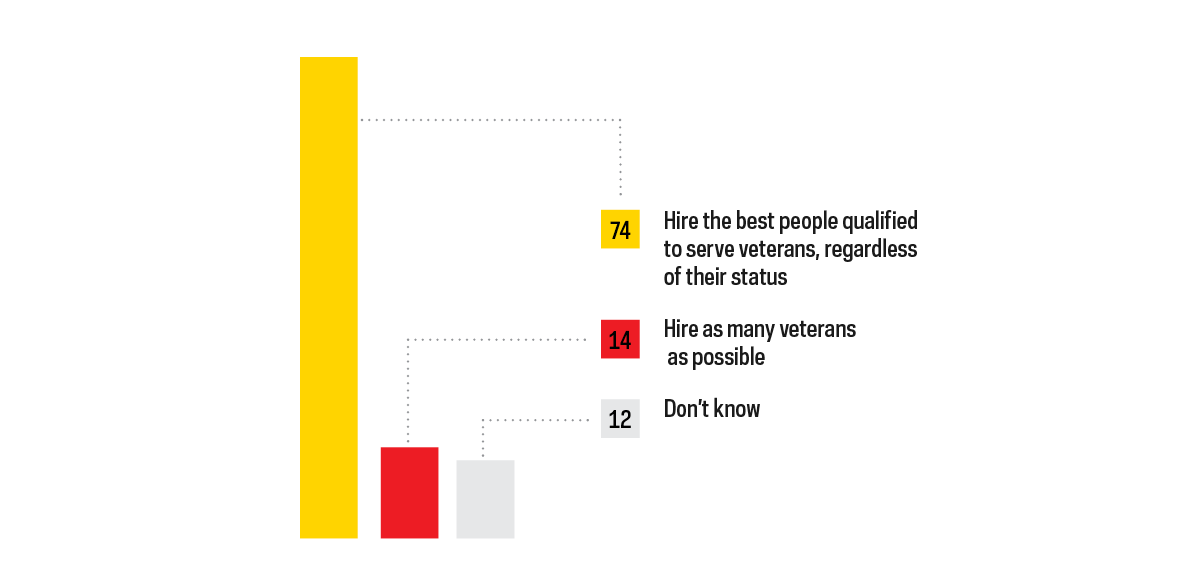
In your opinion, which is the right approach to serving veterans in government? 

Respondents overwhelmingly favor hiring the best qualified people when it comes to serving veterans. Among the DOD sample, the rate is 76 percent; among veterans it is 66 percent.


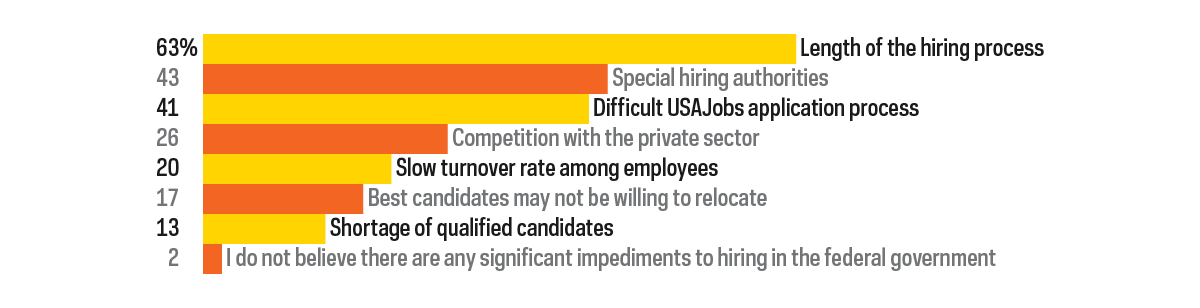
In your opinion, which of the following are the most significant impediments to hiring qualified candidates in the federal government?

respondents could choose up to three

It can take several months to fill a vacancy in government, by which time many candidates lose interest or find employment elsewhere. Respondents cite “cronyism” and “the good old boys club” as impediments to hiring the best candidates, along with federal rules that give preference to certain groups, such as veterans. 


In your opinion, for which of the following groups is USAJobs helpful?

multiple responses allowed

Fewer than half of respondents think USAJobs is useful to people trying to enter the civil service. For people already in government, however, it can be helpful in making their next career move.


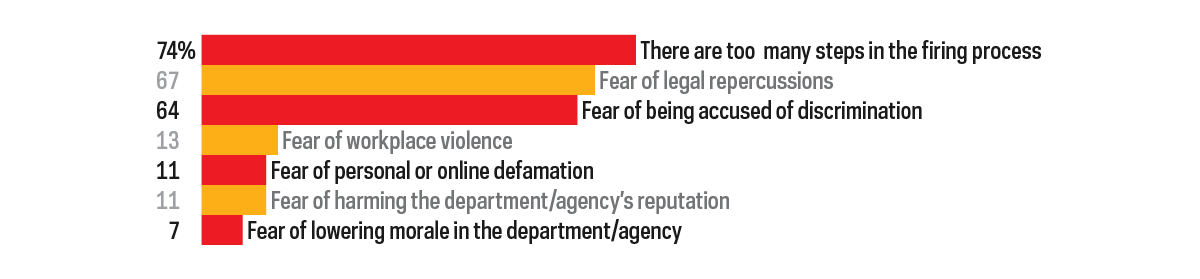
In your opinion, which of the following prevent the firing of poor performers?

multiple responses allowed

Nearly two-thirds of feds worry about legal repercussions or being accused of discrimination if they fire someone. While 13 percent fear workplace violence, only 3 percent of respondents who oversee at least one person had ever refrained from firing someone because they feared for their safety. 


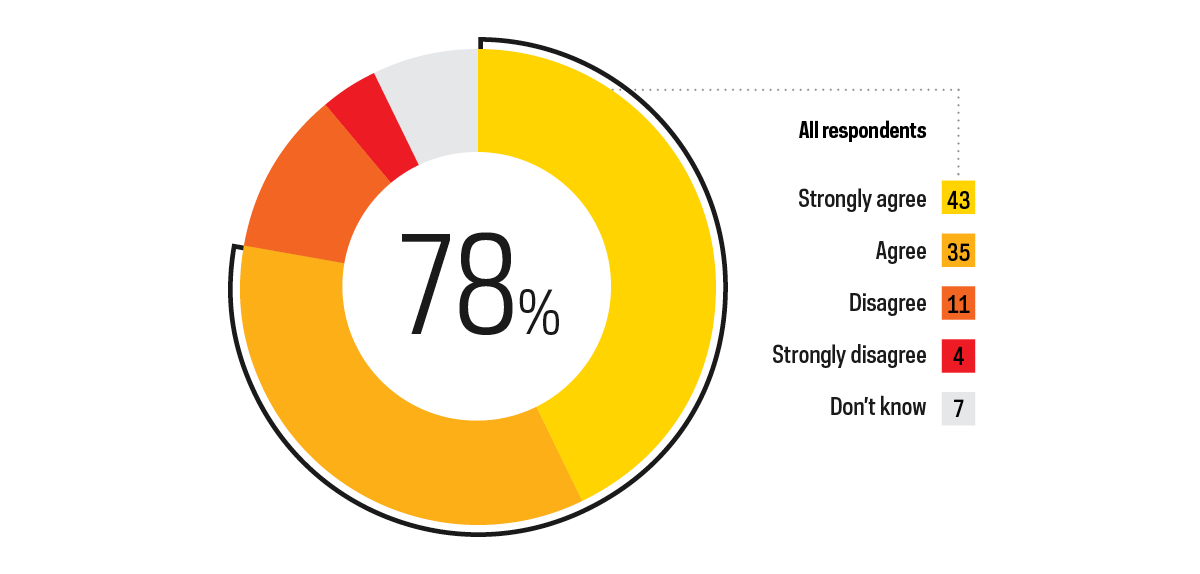
Federal termination procedures discourage the firing of poor performers. 

A whopping 78 percent of federal employees say the process for letting someone go is so cumbersome it discourages firing bad apples.  


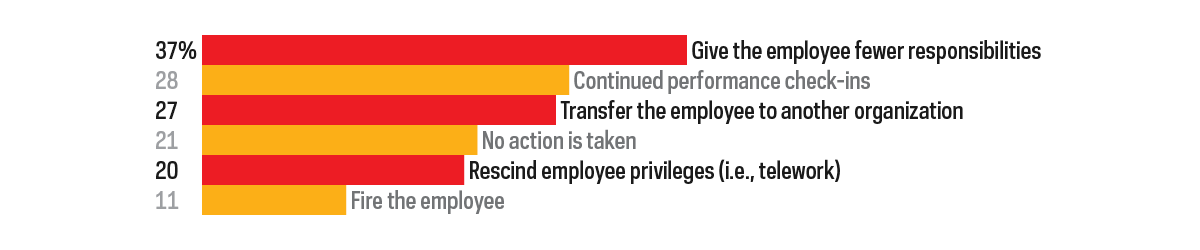
When supervisors in your work unit are faced with a poor performer who cannot or will not improve after counseling, which of the following steps are typically taken?

multiple responses allowed

Managers are much more likely to pawn bad employees off on another organization and lower their expectations than they are to fire one—essentially, they’re willing to make life harder for good employees to avoid the hassle and unpleasantness of holding poor performers accountable. 

background image

Methodology: Government Business Council sent an email survey Nov. 4 to a random sample of Government Executive, Nextgov and Defense One print and online subscribers and received complete responses from 464 federal employees from 30 agencies; 55 percent are GS/GM-13 or above; 29 percent say they qualify for veterans’ preference and 55 percent say they have some input in the hiring process. The margin of error is +/-4.55 at a 95 percent confidence level.

  • Exercise Your Privacy Rights
  • Exercise Your Privacy Rights